

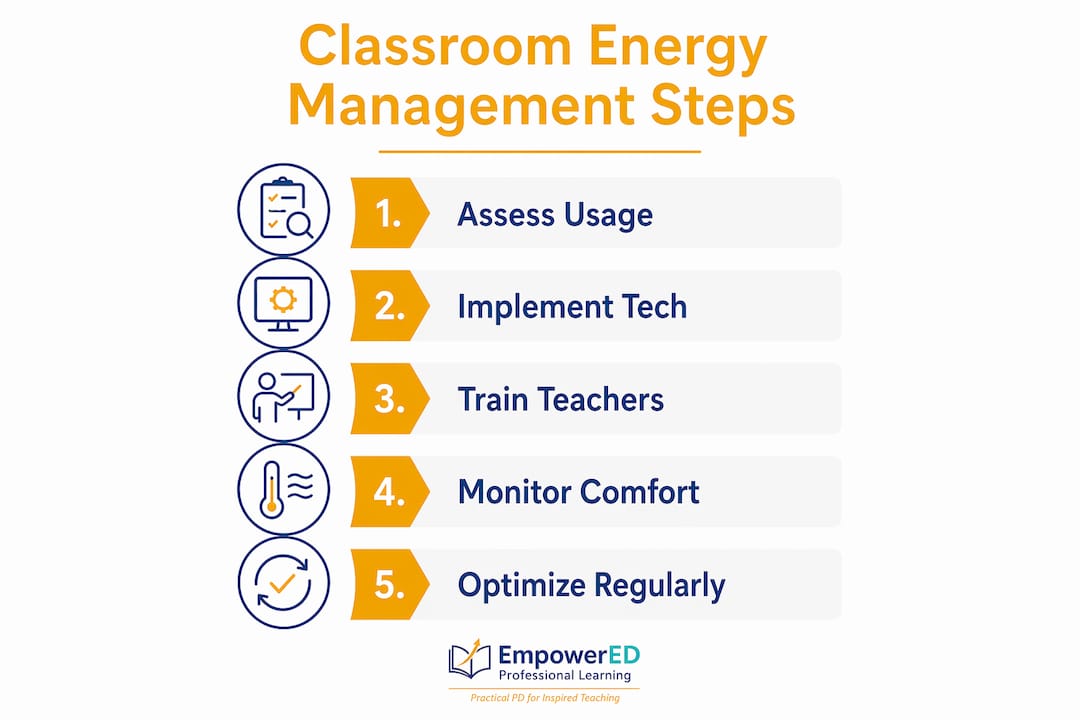
Classroom energy management is the coordinated use of technology and behavioral strategies to reduce energy waste and regulate the physical and emotional environment of a learning space. The term covers two distinct disciplines: technical facility management using IoT sensors, AI, and smart controls, and teacher-led behavioral regulation that shapes student focus and emotional climate. A standard 21-person classroom requires approximately 38,776 BTU/hour of cooling to maintain comfort. That figure alone shows why energy use in classrooms deserves the same attention schools give to curriculum and staffing. Educators who understand both sides of this equation can reduce costs, improve comfort, and support stronger learning outcomes.
What is classroom energy management and why does it matter?
Classroom energy management is defined as the systematic control of energy-consuming systems and human behavioral dynamics within a learning environment. The industry uses two parallel frameworks: building energy management systems (BEMS) for the technical side, and social-emotional learning (SEL) principles for the behavioral side. Both frameworks share the same goal: a stable, productive environment that does not waste resources.
Schools are among the largest energy consumers in the public sector. Lighting, heating, ventilation, and air conditioning (HVAC) account for the majority of a school building’s energy load. When these systems run without occupancy data or behavioral context, they waste energy on empty rooms and uncomfortable students alike. Effective energy management in classrooms addresses both problems at once.
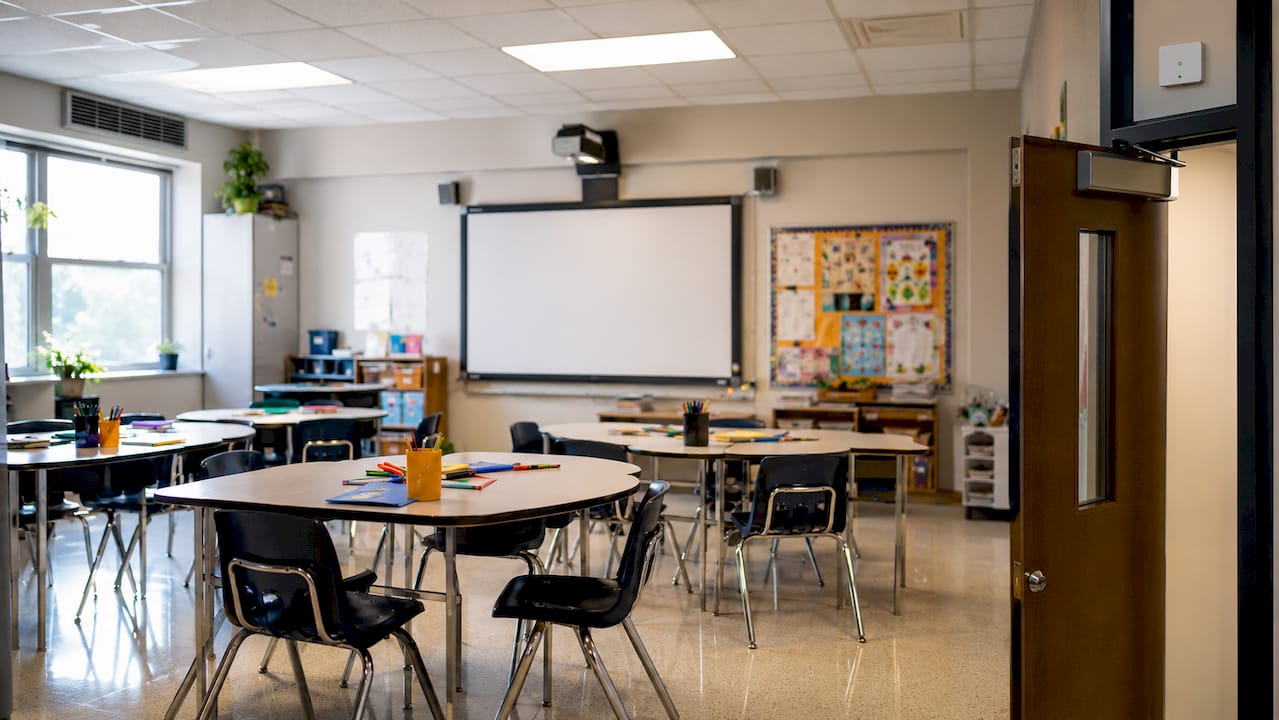
The benefits of energy management extend beyond utility bills. Stable temperature and lighting directly affect student concentration and teacher performance. Classroom routines that align with physical environment controls create conditions where learning happens more reliably. Administrators who treat energy management as an educational strategy, not just a facilities task, see returns in both sustainability metrics and student outcomes.
How do technological systems optimize energy use in classrooms?
AI and IoT integration give schools real-time control over energy-consuming systems based on actual occupancy and environmental conditions. Traditional timers and manual switches leave rooms lit and conditioned long after students leave. Smart systems eliminate that waste automatically.
Occupancy detection and zone control
Modern occupancy detection uses two primary technologies:
- AI-based computer vision: Cameras analyze room occupancy in real time, adjusting lighting and HVAC zone by zone.
- RFID and passive infrared sensors: These track presence without cameras, offering a lower-cost option for schools with privacy concerns.
Zone-based occupancy analysis via AI and IoT yields more granular control of lighting and ventilation than traditional sensors, substantially reducing idle energy consumption. A classroom with 10 students in one corner does not need full HVAC output across the entire space. Zone control solves that problem precisely.
Lighting efficiency and daylight harvesting
LED lighting is the current standard for classroom energy efficiency. LED lighting power density in efficient classrooms ranges from 4.38 to 12.47 W/m². That range reflects the difference between a well-calibrated system and one that simply replaced fluorescent tubes without adjusting controls.
Daylight harvesting systems use photosensors to dim artificial lighting when natural light is sufficient. This approach reduces energy use without requiring manual adjustment from teachers. The system responds to cloud cover, time of day, and window orientation automatically.
| System type | Primary function | Key benefit |
|---|---|---|
| AI computer vision | Real-time occupancy detection | Eliminates energy use in empty zones |
| RFID sensors | Presence tracking by zone | Low-cost, privacy-friendly option |
| LED with daylight harvesting | Adaptive lighting control | Reduces lighting load during daylight hours |
| Smart HVAC controls | Temperature and ventilation by zone | Matches conditioning to actual occupancy |
Pro Tip: Calibrate occupancy sensors at the start of each semester. Furniture rearrangements and seasonal changes in natural light can throw off detection accuracy and reduce system effectiveness.
What behavioral strategies can teachers use to manage classroom energy effectively?
Behavioral energy management focuses on the human side of the classroom. Teachers regulate student focus, emotional climate, and group dynamics through deliberate, repeatable strategies. This is not about controlling students. It is about creating conditions where productive energy flows consistently.
The concept of emotional contagion explains why teacher behavior matters so much. Emotional contagion in classrooms describes how a teacher’s emotional state spreads to students, shaping the entire room’s energy level. A calm, regulated teacher anchors the class. A stressed or reactive teacher amplifies student anxiety and disruption.
Practical behavioral strategies teachers can apply immediately include:
- Stress self-check before class: Teachers who assess their own emotional state before entering the room set a deliberate baseline. This takes 60 seconds and prevents unintentional emotional contagion.
- 30-minute brain breaks: Micro-breaks every 30 minutes reset student focus proactively rather than reactively. Waiting until students are disengaged costs more instructional time than the break itself.
- Intentional speech rhythm: Slowing down speech pace and lowering vocal volume signals calm to the group. Students unconsciously match the teacher’s rhythm.
- Grounding rituals: Brief, consistent opening routines, such as a 2-minute silent reading period or a structured check-in question, signal to students that focused work is beginning.
- Classroom reset methods: When energy spikes mid-lesson, a structured physical reset, such as standing and stretching for 90 seconds, returns the group to a workable state faster than verbal redirection alone.
Student engagement strategies that incorporate these behavioral resets consistently outperform reactive discipline approaches. The key is timing. Intervening before energy becomes unmanageable is always more effective than responding after disruption begins.
Pro Tip: Watch for early warning signs of energy buildup: increased side conversations, fidgeting, and off-task glances. A 90-second movement break at that moment prevents a 10-minute disruption later.
What challenges exist in balancing energy efficiency with occupant comfort?
Efficiency and comfort are not automatically aligned. Over-automation is a real risk in classroom energy systems. When systems prioritize energy savings above all else, they can create conditions that undermine learning.
Balancing daylight-responsive controls with visual comfort is a documented challenge in school lighting retrofits. Automated dimming that responds to sunlight can create glare on whiteboards or uneven light distribution across student desks. Both conditions increase eye strain and reduce concentration.
Common pitfalls in classroom energy system implementation include:
- Dead zones: Areas where occupancy sensors fail to detect presence, leaving students in poorly lit or poorly conditioned spaces.
- Glare from daylight harvesting: Systems that dim artificial light too aggressively when sunlight enters at low angles.
- Thermal discomfort from zone control: Zones set too broadly, leaving students near windows overheated while those near the door are cold.
- Security and data traffic issues: IoT implementation challenges include hardware compatibility and cloud monitoring security, which require coordination between facilities teams and school IT departments.
Automated systems require human-in-the-loop commissioning to avoid these problems. Teacher feedback is the most reliable source of comfort data. Administrators should build a formal feedback loop into any energy system rollout, collecting input from teachers during the first semester of operation and adjusting system parameters accordingly.
Pro Tip: Use formative assessment techniques to gather student comfort data alongside academic data. A simple weekly exit ticket asking about temperature and lighting takes 30 seconds and gives facilities teams real occupant feedback.
How is the future of classroom energy management evolving?
The next generation of classroom energy management moves from reactive control to predictive, adaptive management. Hybrid AI models combining neural networks and reinforcement learning improve energy and environmental control significantly. These systems learn from historical occupancy patterns, weather data, and real-time sensor inputs to anticipate needs before they arise.
Transitioning from fixed schedules to AI-driven adaptive models allows schools to improve energy efficiency dynamically while supporting both sustainability goals and educational quality. A system that knows Monday mornings bring a full class and Friday afternoons bring half attendance can pre-condition spaces accordingly, without manual input.
Key trends shaping the future of energy management in classrooms include:
- Predictive HVAC control: Systems that adjust temperature and ventilation based on forecasted occupancy, not just current sensor readings.
- Air quality integration: CO₂ and particulate sensors linked to ventilation controls, improving both energy efficiency and cognitive performance.
- Unified building dashboards: Single interfaces that give administrators real-time visibility into energy use, comfort metrics, and occupancy across an entire school.
- AI-enhanced learning environments: AI-driven adaptive learning ecosystems that support sustainability goals while improving instructional conditions.
Schools preparing for these systems should start with a baseline energy audit, identify the highest-consumption spaces, and pilot smart controls in one or two classrooms before scaling. Educators who understand AI in education are better positioned to advocate for these systems and use them effectively once deployed.
Key Takeaways
Effective classroom energy management requires both technical systems and teacher-led behavioral strategies working together to reduce waste and maintain a productive learning environment.
| Point | Details |
|---|---|
| Dual-discipline definition | Classroom energy management covers both building technology systems and teacher behavioral regulation. |
| Technical systems reduce waste | AI and IoT occupancy controls eliminate energy use in empty or partially occupied classroom zones. |
| Teachers are behavioral anchors | Emotional contagion research shows teacher stress levels directly shape student focus and classroom climate. |
| Comfort and efficiency must be balanced | Over-automation causes glare, dead zones, and thermal discomfort; human oversight is required during commissioning. |
| Adaptive AI is the next step | Predictive AI models that learn from occupancy patterns will replace fixed-schedule energy controls in K-12 schools. |
Why the human factor is the most underrated part of energy management
I have worked with educators and school systems long enough to know that technology alone does not solve classroom energy problems. Schools invest in smart sensors and LED retrofits, then wonder why teachers override the automated controls within two weeks. The reason is almost always the same: the system was designed without teacher input, and it makes the room uncomfortable.
The research on emotional contagion is not just interesting theory. It is a practical framework that changes how I think about classroom management entirely. A teacher who walks in stressed, without taking 60 seconds to regulate, will spend the next 20 minutes managing the emotional fallout in the room. That is energy waste of a different kind, and no IoT sensor measures it.
What I advocate for is a combined professional learning approach. Teachers need to understand both sides of this equation. They need to know how to read a room’s emotional temperature and how to communicate with their facilities team when the physical temperature is wrong. Neither skill is taught in most preparation programs.
The schools that get this right treat energy management as a shared responsibility. Administrators provide the systems and the data. Teachers provide the feedback and the behavioral leadership. When both sides are trained and communicating, the results show up in utility bills and in student performance data.
— Brian Koster, Ed.D.
Professional learning resources for classroom energy management
Educators who want to put these strategies into practice need more than a one-time workshop. Empowered Professional Learning offers targeted courses that address both the technology and behavioral sides of classroom management.
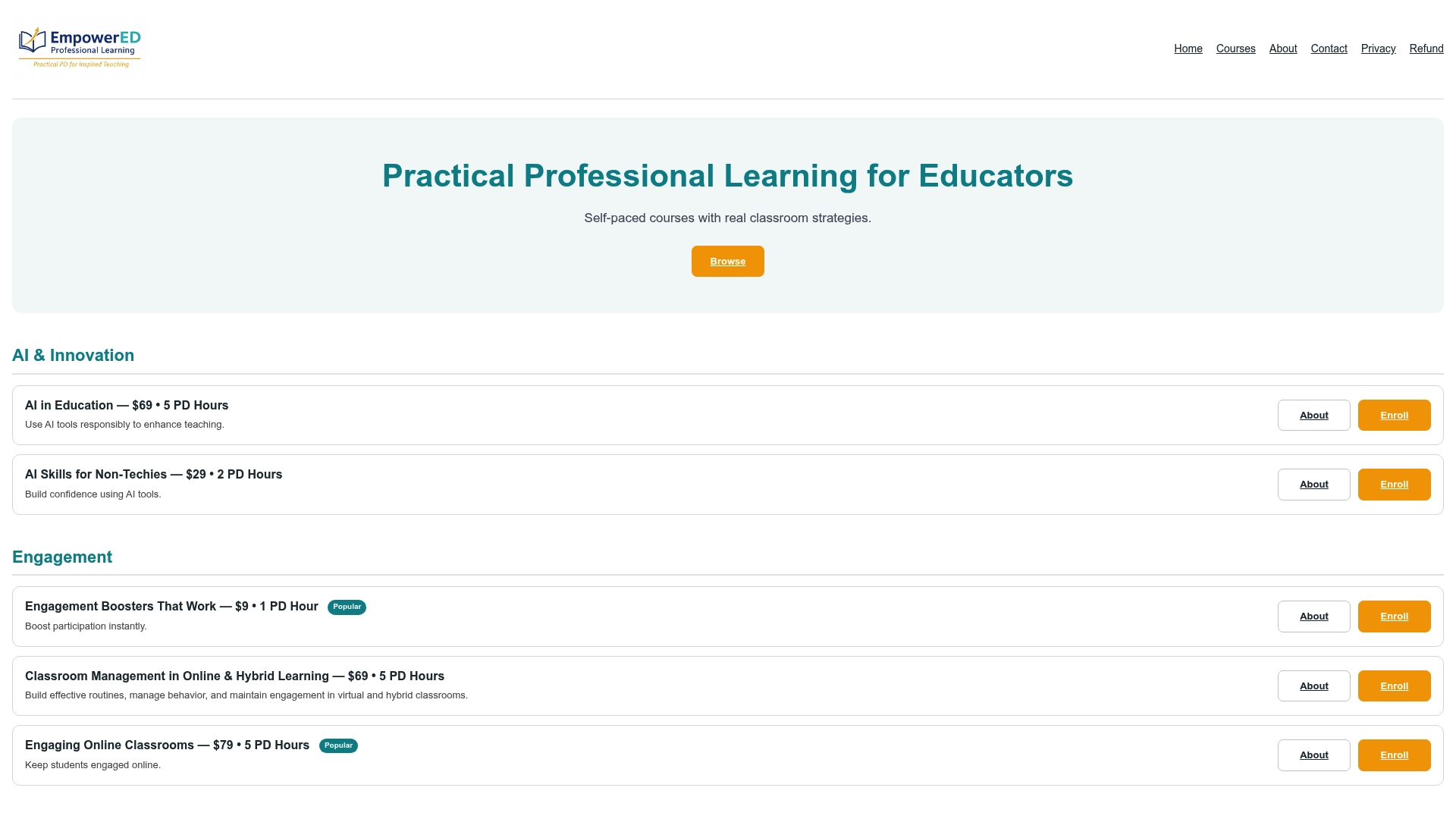
The AI in Education course gives educators a practical foundation for understanding and advocating for AI-driven classroom systems. For the behavioral side, the Engagement Boosters That Work resource gives teachers concrete techniques for regulating classroom energy through proven engagement strategies. Both resources are designed for immediate classroom application, with no prior technical background required. Empowered Professional Learning courses are built around the real challenges educators face, not theoretical frameworks that rarely survive contact with an actual classroom.
FAQ
What is classroom energy management in simple terms?
Classroom energy management is the coordinated control of both physical systems (lighting, HVAC) and teacher-led behavioral strategies to reduce energy waste and maintain a productive learning environment.
How does IoT improve energy efficiency in classrooms?
IoT sensors detect real-time occupancy and environmental conditions, allowing lighting and HVAC systems to adjust automatically and eliminate energy use in empty or partially occupied spaces.
What is emotional contagion and how does it relate to classroom energy?
Emotional contagion is the process by which a teacher’s emotional state spreads to students, directly shaping the classroom’s energy level and focus. Teachers who regulate their own stress before class anchor the group’s collective energy.
How often should teachers use brain breaks for energy management?
Micro-breaks every 30 minutes reset student focus proactively. Scheduling them before energy dips or disruptions occur is more effective than using them as a reactive response.
What is the biggest risk of automating classroom energy systems?
Over-automation can create glare, dead zones, and thermal discomfort that undermine learning. Human-in-the-loop commissioning and regular teacher feedback are required to keep automated systems aligned with actual occupant needs.