The single highest-impact move for building student resilience is pairing universal, evidence-based social-emotional learning with explicit attention to teacher wellness. Start this week with a three-minute calming routine before a challenging lesson: a few slow breaths, a values check-in, or a quick mood card scan. Research from CASEL and the APA backs this approach, and it costs you nothing but a few minutes of class time.
TL;DR:
- Implementing simple, daily routines like three-minute breathing exercises or mood check-ins can reduce student stress and improve emotional regulation within weeks.
- Building school-wide systems with leadership support, ongoing teacher coaching, and family engagement enhances the sustainability and impact of social-emotional learning efforts.
- Prioritizing teacher wellness through mindfulness and resilience training correlates with better classroom engagement and student outcomes when combined with regular coaching.
- Focusing on physical health, such as adequate sleep and movement breaks, plays a crucial role in supporting students’ resilience and capacity to benefit from SEL strategies.
- Starting small with consistent routines in one classroom and gradually expanding to whole-school practices is most effective for lasting resilience development.
Table of Contents
- 1. Top evidence-based strategies to build resilience
- 2. Ready-to-copy classroom activities and short routines
- 3. Building schoolwide infrastructure for lasting impact
- 4. Choosing priorities and measuring progress
- 5. How EmpowerED Professional Learning supports resilience work
- 6. The impact of physical health and sleep on resilience
- 7. What realistic implementation looks like in practice
- Get started with EmpowerED’s professional learning courses
- Sources
- FAQ
1. Top evidence-based strategies to build resilience
Not every resilience strategy deserves equal attention. The following list ranks approaches by evidence strength and ease of classroom implementation, so you can decide where to start.
- Teach social-emotional competencies explicitly. The CASEL framework covers self-awareness, self-management, social awareness, relationship skills, and responsible decision-making. Classroom-based SEL programs led by teachers improve SEL skills and reduce disruptive behavior, with meta-analytic effect sizes for universal SEL interventions ranging from 0.23 to 0.58 for skill gains and 0.18 to 0.28 for academic outcomes, according to meta-analytic evidence from ERIC. Elementary teachers can use short daily lessons; secondary teachers can embed the same skills into advisory periods or homeroom.
- Build school connectedness and caring relationships. Students who feel connected to at least one caring adult at school experience better emotional and behavioral outcomes. CDC guidance identifies school connectedness as a protective factor linked to lower substance use and improved mental health. A simple daily greeting at the door or a weekly check-in conversation builds this over time.
- Teach emotion regulation and stress management skills. The APA’s BAM model offers scripted classroom resources that teach values, body, action, and mind strategies to help students manage stress and build resilience. Mindfulness programs delivered by classroom teachers, such as Learning to Breathe, show improvements in emotion regulation and self-regulation skills. Aim for short, frequent sessions rather than occasional long ones: five minutes, three times a week, beats one thirty-minute session a month.
- Build problem-solving and agency. Resilience grows when students practice making decisions and solving real problems, not just hearing about grit — practical guidance on student-led community impact and agency projects can help with this approach, as described in How to make an impact in your community: a student guide. APA guidance on fostering resilience frames resilience as a teachable set of skills centered on agency and problem-solving, better suited to classroom design than a single mindset lecture.
- Use peer support and mentoring structures. Peer circles and mentoring give students practice supporting each other, reinforcing social-emotional skills taught in classrooms. Middle and high school students benefit from structured peer mentoring programs; younger students respond well to classroom buddy systems.
- Strengthen teacher and adult SEL and wellness. Teachers cannot model regulation skills they are not practicing themselves. The CARE program evaluation found that teacher-focused mindfulness and resilience professional development improved teacher wellbeing and some classroom engagement indicators, which suggests investing in adult SEL pays off in the classroom, not just the staff room.
- Use Universal Design for Learning and inclusive practices to reduce chronic stressors. When lessons are accessible from the start, students spend less energy managing confusion or exclusion and more energy on learning. This matters most for students juggling language barriers, learning differences, or unstable home environments.
Pro Tip: Pick one strategy and implement it with fidelity for four weeks before adding a second one: half-implemented programs rarely show the gains full ones do, and equity gaps widen fastest when new routines are applied inconsistently across classrooms.
2. Ready-to-copy classroom activities and short routines
These activities require little prep and fit into existing class time. Each one lists what you need and how long it takes.
- BAM mini-lesson (Values, Body, Action, Mind), 15 minutes. Objective: introduce one resilience skill using the APA’s BAM lesson framework. Materials: printed worksheet or slide. Steps: name a personal value, practice one calming body technique, identify one action step, and close with a reflection prompt. Assessment cue: ask students to name their chosen action step aloud or in a journal entry.
- Three-minute breathing routine, 3 minutes. Objective: lower physiological stress before a test or transition. Materials: none. Steps: guide four rounds of slow inhale-hold-exhale breathing, count aloud the first time. Differentiation: offer a visual breathing card for students who prefer not to close their eyes.
- Mood cards check-in, 5 minutes. Objective: normalize naming emotions. Materials: a set of printed mood cards or a digital poll. Steps: students select the card that matches their current state, share with a partner or silently reflect. Works well at the start of class or after recess.
- Peer-support circles, 15 to 20 minutes. Objective: build peer connection and practice active listening. Materials: chairs in a circle, a talking object. Steps: pose one prompt, each student shares briefly, no cross-talk during sharing. Assessment cue: note participation rates over several weeks, not single sessions.
- Collaborative problem-solving protocol, 20 to 30 minutes. Objective: build agency and group decision-making. Materials: a real classroom or school issue to solve. Steps: define the problem, brainstorm options in small groups, vote on one to try, assign roles. Fits science, social studies, or advisory periods equally well.
- Brief journaling prompt, 5 to 10 minutes. Objective: give students private space to process stress. Materials: notebook or shared digital doc. Steps: pose an open prompt such as “What is one thing you handled well this week?” Differentiation: allow drawing or voice memos for students who struggle with writing.
- Quick restorative conversation script, 5 to 10 minutes. Objective: repair conflict without escalating it. Materials: none. Steps: ask what happened, who was affected, and what needs to happen next; keep tone neutral and factual. Useful after a classroom disruption instead of a punitive response.
For remote or hybrid classrooms, most of these adapt directly: breathing routines and mood check-ins work over video, peer circles can run in breakout rooms, and journaling moves easily to a shared document. Students with sensory sensitivities or language barriers benefit from visual supports and translated prompts for any of the above. More self-regulation strategies for classroom use and a set of short mindfulness routines offer additional ready-to-use material if you want to expand this list.
Pro Tip: Script the exact words you will use for each routine and keep them posted where you can glance at them: predictable language lowers anxiety for students and makes the routine easier for you to run consistently, even on a hard day.

3. Building schoolwide infrastructure for lasting impact
Individual classroom routines only go so far without support at the building level. A systematic approach to SEL requires several pieces working together.
- Leadership buy-in. Principals who name resilience and SEL as a schoolwide priority, not just a classroom add-on, see stronger and more durable results, according to implementation research summarized in the ERIC meta-analysis.
- PD infrastructure. Short workshops alone rarely change practice. Pair brief training sessions with ongoing coaching and regular team meetings where teachers troubleshoot together.
- SEL standards and learning progression. Map which skills get taught at which grade level so students build on prior learning instead of repeating the same introductory lesson every year.
- Family partnerships. Share what students are learning at school so families can reinforce the same language and skills at home.
- Coordination with mental health services. Classroom SEL is not a substitute for counseling or clinical support; build clear referral pathways for students who need more than a classroom routine can offer.
Adult SEL deserves its own line item in any PD plan. The CARE program study found that teacher mindfulness and resilience training improved teacher wellbeing and some classroom engagement indicators when the training included ongoing coaching rather than a single workshop. Sequence supports so teachers get an initial short session, then coaching check-ins over several weeks, then peer team meetings to sustain the practice. For a closer look at how professional development connects to daily classroom SEL, see this guide to teacher wellness and SEL strategies.
A practical checklist for principals or teacher-leaders starting a pilot: identify one grade band or department, choose one SEL practice and one adult wellness practice to pair together, set a six-week timeline, and schedule a midpoint check-in before deciding whether to expand.
4. Choosing priorities and measuring progress
With limited time and budget, you need a fast way to decide what to try first and a simple way to know if it worked.
Rank candidate strategies using three questions: how much impact does the evidence suggest, how much effort does it take to implement, and does it work equitably across your student population. A strategy with strong evidence but heavy setup costs might rank behind a simpler one with moderate evidence and no prep burden.
- Track a single-item school connectedness measure. Ask students periodically whether they feel there is an adult at school they can talk to.
- Use a brief wellbeing screener or student self-report. Keep it short enough to administer in under five minutes.
- Watch a classroom engagement proxy. On-task observation rates or assignment completion percentages work as simple stand-ins for deeper engagement.
- Check teacher implementation fidelity. A short checklist noting whether the routine happened as planned catches problems before they show up in outcome data.
- Monitor attendance and discipline trends. These schoolwide numbers often shift before individual wellbeing scores do.
Run a pilot for six to twelve weeks, comparing a pre-implementation baseline to a post-implementation check using the same measures. If the data show no change, check fidelity first: was the routine actually happening as designed. Then check dosage: was it frequent enough. Then check cultural fit: does the activity make sense for your specific student population, or does it need adaptation.
5. How EmpowerED Professional Learning supports resilience work
Educators trying to build resilience skills rarely need more theory. They need classroom-ready material and a little guided practice, which is where a short, focused course can close the gap between reading about SEL and running it in your own room.
- Engagement Boosters That Work covers classroom routines and engagement techniques that pair directly with the activities in this article, available through EmpowerED’s free courses.
- Social-Emotional Learning & Teacher Wellness addresses both adult SEL and classroom SEL implementation, the same pairing this article identifies as the top priority, through the SEL Professional Development course.
- Universal Design for Learning (UDL) & Accessibility helps reduce the chronic stressors that come from inaccessible lesson design, available on the UDL and accessibility course page.
Courses are self-paced with instructor feedback on most offerings and a certificate that may qualify for PD credit. A practical way to start: form a cohort of six to eight teachers, take one short course together, and apply the impact-effort-equity rubric and simple metrics from this article to see what changes over a grading period.
6. The impact of physical health and sleep on resilience
Resilience work happens inside bodies that are tired, hungry, or under-slept, and no amount of skilled instruction fixes that on its own. Adolescents who are chronically sleep-deprived show more irritability, weaker impulse control, and lower classroom engagement, all of which undercut the exact skills SEL lessons are trying to build.
Physical activity plays a similar role. Movement breaks between lessons reduce restlessness and give students a physiological reset that a calming routine alone cannot always provide. Schools that build short movement breaks into the daily schedule, alongside SEL routines, give students two complementary tools rather than one.
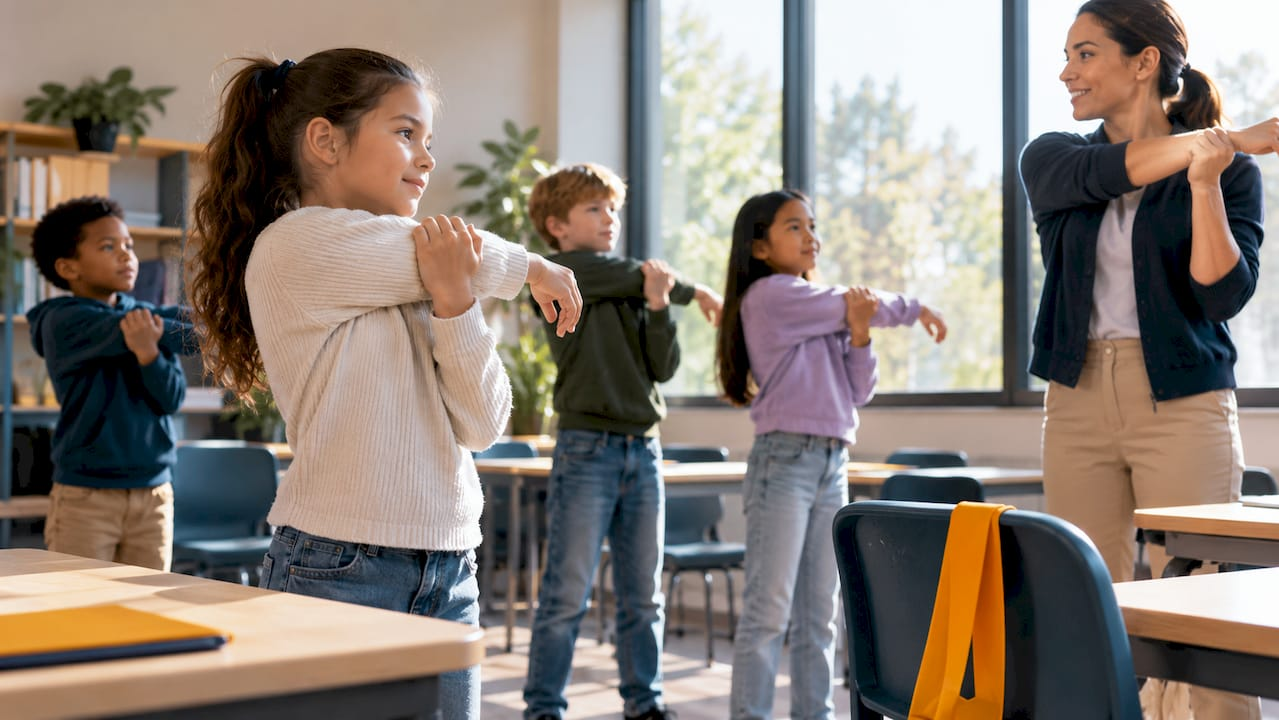
None of this means teachers are responsible for solving sleep or nutrition problems at home. It does mean that a resilience plan built entirely on classroom mindset work will underperform if basic physical needs go unaddressed. Simple, low-cost moves such as scheduling demanding lessons for times when students are typically more alert, or building brief stretch breaks into long blocks, support the same goals as an SEL lesson without extra curriculum.
7. What realistic implementation looks like in practice
Most teachers are stretched thin, so the strategies that stick are the small, sustained ones, not the elaborate programs that fade by October. Short, frequent calming routines such as daily three-minute breathing practices are more effective and sustainable than infrequent assemblies.
In one classroom I worked with, a teacher paired a two-minute mood check-in with a single peer-support circle each week. Nothing elaborate, no new curriculum to learn. Within a grading period, students were naming their own stress triggers more readily and asking for peer support without prompting.
Start with one short routine you can run in your sleep and one school-level PD step, like a single CARE-style coaching session for your team. Build from there.
— Brian Koster, Ed.D.
Get started with EmpowerED’s professional learning courses
If you want guided support turning any of these strategies into a habit rather than a one-time lesson, EmpowerED Professional Learning offers courses built by educators for educators, with practical strategies you can use the same week you take them.
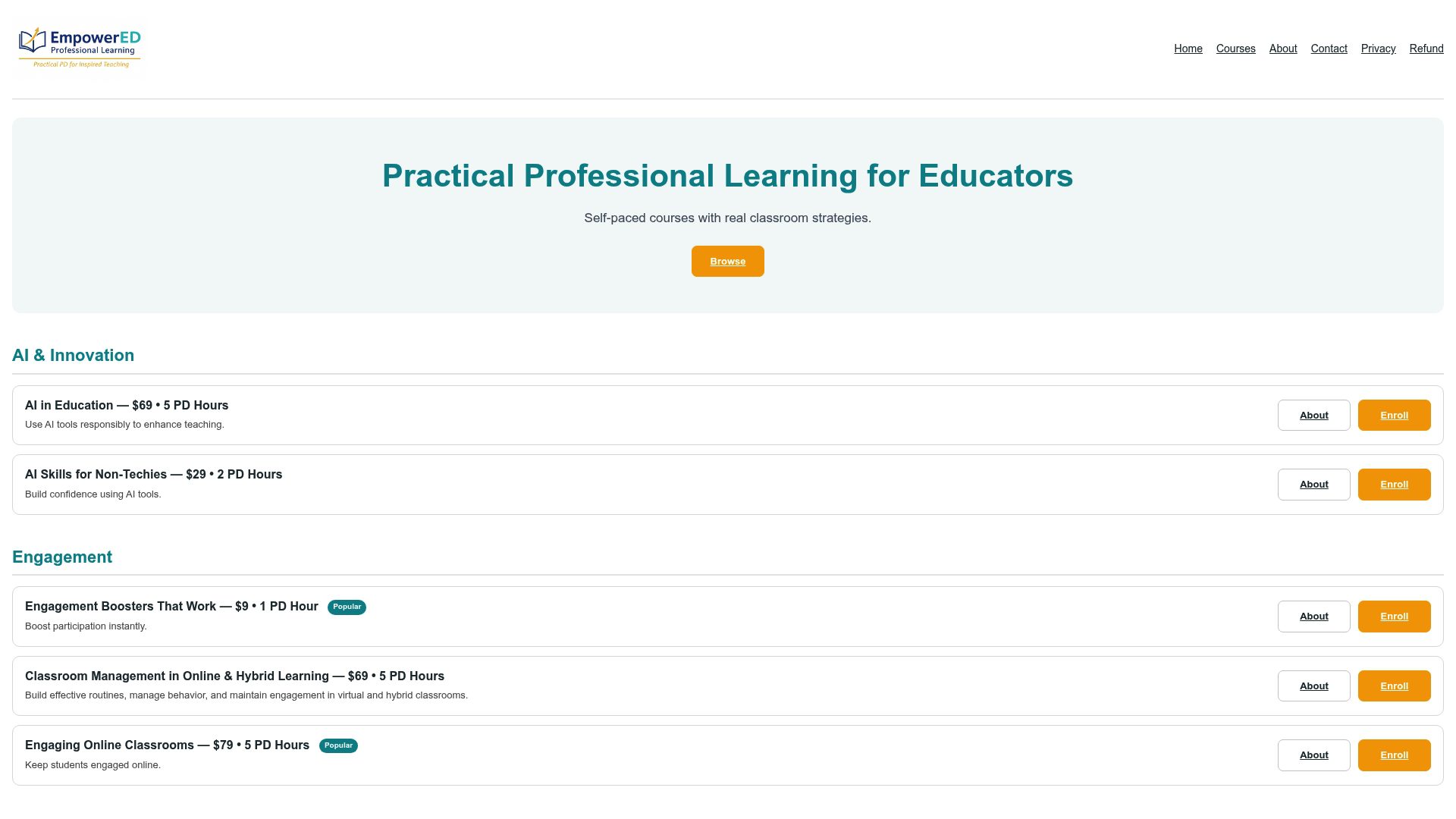
The Social-Emotional Learning & Teacher Wellness course pairs directly with the adult SEL priority in this article, while Engagement Boosters That Work and the full professional learning catalog cover classroom routines, UDL, and executive function support for a broader team rollout. A good next step is piloting one course with a small team of six to eight teachers before scaling to a full department. Check with your district’s PD approval process before enrolling if you need the certificate to count toward requirements.
Sources
- Evidence for Social and Emotional Learning in Schools (ERIC)
- APA BAM! Student/Teacher resilience lessons (Grades 9–12)
FAQ
What are the 7 C’s to build resilience?
Definitions vary across sources, but a commonly cited version includes competence, confidence, connection, character, contribution, coping, and control. These are typically framed as qualities that develop through supportive relationships and repeated practice, rather than a fixed curriculum.
What are the 5 C’s of resilience?
Different frameworks use different sets, so there is no single agreed list. Programs that reference “5 C’s” often emphasize a subset such as competence, confidence, connection, character, and control, drawn from broader youth development models.
What are 5 ways to build resilience?
Based on the strategies covered in this article, effective approaches include teaching social-emotional skills explicitly, building strong relationships with caring adults, practicing emotion regulation routines like brief breathing exercises, fostering student agency through problem-solving, and supporting teacher wellness so adults can model these skills consistently.
What are the 7 pillars of resilience?
This is another framework with varying definitions depending on the source, often including insight, independence, relationships, initiative, creativity, humor, and morality. Because no single authoritative version applies universally, treat these as one lens among several rather than a fixed standard.
How long does it take to see results from SEL practices?
Pilot programs often assess outcomes after several weeks to months of implementation, comparing pre- and post-data on school connectedness or engagement. Results depend heavily on implementation fidelity and frequency, so a routine practiced inconsistently will take longer to show change than one built into the daily schedule.