Digital tools in K-12 education are defined as technology-based platforms, applications, and systems that actively shape how students participate, learn, and demonstrate understanding. The role of digital tools in engagement goes far beyond replacing paper tasks. A 2026 meta-analysis found that AI-supported digital learning environments produced a pooled effect size of SMD 1.01 on student engagement. That number signals a large, meaningful shift in how students connect with content when technology is used with clear instructional intent. For K-12 educators and school leaders, the practical question is not whether to use digital tools, but how to use them in ways that are equitable, culturally responsive, and built to last.
How do digital tools enhance student engagement through diverse participation?
Digital tools enhance engagement by expanding how students can contribute, not just how teachers can deliver content. Traditional hand-raising favors a narrow group of students. Technology removes that bottleneck.

Participation menus are one of the most practical applications of this idea. A participation menu gives students multiple ways to respond to the same prompt: a voice note, a short video, a written post in a class forum, or a visual meme. This approach accommodates neurodiversity and reduces anxiety for students who struggle with public speaking. The result is broader, more authentic participation across the whole class.
Real-time engagement tools add another layer. Platforms like Mentimeter and Slido allow educators to collect immediate responses through polls, word clouds, and open-ended questions. Students see their input reflected on screen in seconds. That visibility reinforces that their voice matters, which directly supports affective-motivational engagement.
Key benefits of digital participation tools include:
- Multiple contribution formats (audio, video, text, visual) that serve different learning styles
- Anonymous response options that reduce social pressure for anxious or introverted students
- Immediate feedback loops that keep students connected to the lesson in real time
- Asynchronous options that give students time to process before contributing
- LMS integration that keeps all tools in one place and reduces cognitive load
Pro Tip: Integrate your participation tools directly into your learning management system. Fragmented apps create friction for students and teachers alike. When everything lives in one workflow, participation rates go up and technical barriers go down.
What is the impact of culturally responsive digital engagement strategies?
Culturally responsive digital engagement means designing technology use so that every student, regardless of language, background, or ability, can fully participate. This is not a bonus feature. It is a baseline requirement for equitable instruction.
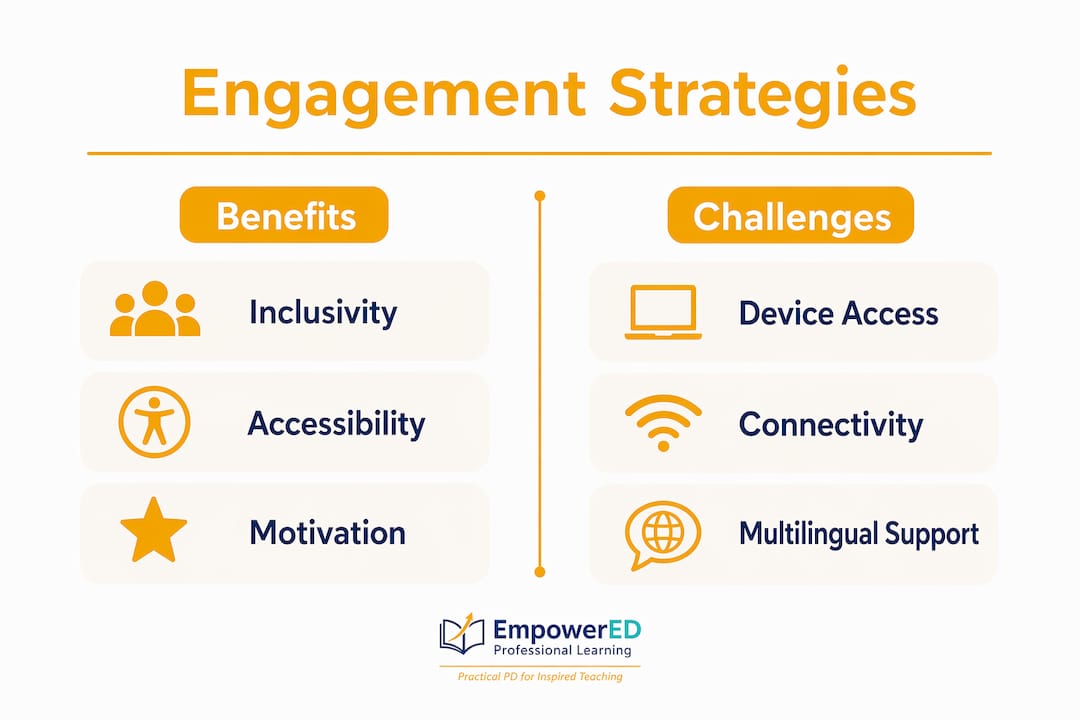
Digital inequities in device access, connectivity, and multilingual support directly affect which students engage and which ones fall behind. Students with limited English proficiency, for example, benefit more from asynchronous participation modes that give them time to process language before responding. Synchronous tools can inadvertently disadvantage these students if they are the only option available. Offering both modalities is not accommodation. It is good design.
The 4Ps framework, which stands for Presence, Participation, Protection, and Progress, provides a structured way to evaluate digital tools for equity. This framework pushes educators beyond basic accessibility checklists and asks whether a tool actively supports cultural inclusion and student progress.
| CRT Digital Engagement Strategy | Practical Benefit | Key Challenge |
|---|---|---|
| Multimodal content delivery | Reaches visual, auditory, and kinesthetic learners | Requires more planning time |
| Multilingual platform support | Reduces language barriers for ELL students | Not all platforms offer this |
| Asynchronous participation options | Gives processing time to diverse learners | Can reduce real-time connection |
| Icon-based and visual navigation | Supports emerging readers and multilingual users | Needs intentional platform selection |
| Anonymous contribution modes | Lowers social risk for marginalized students | Requires trust-building culture |
Technology can reduce systemic inequities, but it can also amplify them if tool selection is careless. Evaluating platforms through a social justice lens, rather than just a features checklist, is what separates effective digital engagement from digital decoration.
Which digital engagement strategies drive student motivation and achievement?
Evidence-based digital engagement strategies produce measurable results. A 2026 cluster-randomized study found that personalized learning technologies produced effect sizes ranging from 0.454 to 0.570 on multiple engagement variables over just nine weeks. That is a substantial gain in a short time frame, and it points directly to personalization as a driver of motivation.
The most significant shift in effective digital engagement is the move from student compliance to student creation. When students design digital escape rooms, produce short documentary videos, or build interactive timelines, they are not just consuming content. They are creating for authentic audiences, which deepens ownership and voice. This shift also produces work that students are genuinely proud of, which sustains motivation far longer than a quiz score.
Formative assessment tools play a critical supporting role. Digital formative workflows give educators real-time data on where students are struggling, allowing instructional adjustments before misunderstanding becomes failure. That feedback loop keeps students active in their learning rather than passive recipients of grades.
Five practical digital engagement strategies for K-12 educators:
- Use participation menus to offer at least three contribution formats per lesson, including at least one non-verbal option.
- Assign student-generated content projects where the audience extends beyond the classroom, such as a school blog or community presentation.
- Run weekly formative check-ins with digital tools that produce visual data you can share with students immediately.
- Pair synchronous and asynchronous tools so every student has a pathway to contribute regardless of language or processing speed.
- Connect digital tasks to real decisions, such as having students analyze local data and present findings to a school board.
Pro Tip: Before adding any new digital tool to your instruction, write down the specific learning goal it serves. If you cannot name the goal in one sentence, the tool is not ready to use. This single habit prevents the novelty effect from replacing genuine engagement.
How can educators integrate digital tools to sustain engagement long-term?
Sustained digital engagement does not happen through tool adoption alone. It requires intentional instructional design, ongoing professional learning, and a clear-eyed view of what is actually working in your classroom.
Sustained, personalized professional learning is the most reliable predictor of effective digital tool integration. One-size-fits-all professional development sessions rarely change classroom practice. Educators need training that is specific to their students, their content area, and their current challenges. Reflective, tailored learning builds the confidence to use technology with purpose rather than novelty.
Data-informed instruction is equally important. Digital platforms generate usage data, completion rates, and response patterns that most educators never examine. Reviewing that data weekly and adjusting instruction accordingly is what separates sustainable engagement from a temporary spike in participation.
Best practices for long-term digital engagement integration:
- Audit your current tools and eliminate any that do not connect to a specific learning goal.
- Build family communication into your digital workflow so caregivers understand how tools are used and why.
- Schedule regular reflection cycles where you review student engagement data and adjust your approach.
- Prioritize tools with multilingual and multimodal support to serve your full student population.
- Collaborate with colleagues to share what is working and reduce the burden of individual trial and error.
Avoiding the novelty effect is a real challenge. New tools generate excitement, but that excitement fades within weeks if the tool does not serve a clear instructional purpose. The educators who sustain high engagement are the ones who align tools with measurable goals and use real-time data to refine their practice continuously.
Key Takeaways
Digital tools drive lasting student engagement only when they are chosen with instructional intent, designed for equity, and supported by ongoing, personalized professional learning.
| Point | Details |
|---|---|
| Participation menus increase equity | Offering multiple contribution formats serves neurodiverse and multilingual learners effectively. |
| Personalization produces measurable gains | Personalized learning technologies showed effect sizes of 0.454–0.570 on engagement in nine weeks. |
| Student creation beats compliance | Assigning digital content creation for authentic audiences builds deeper motivation and ownership. |
| Equity requires active tool evaluation | Use the 4Ps framework to assess whether tools support presence, participation, protection, and progress. |
| Professional learning sustains integration | Tailored educator training is the most reliable path to consistent, effective digital tool use. |
What I have learned about digital tools and real engagement
The most common mistake I see in schools is treating digital tool adoption as the goal. Administrators celebrate when every teacher uses a new platform. Students celebrate the novelty. Then, six weeks later, engagement drops back to where it started. The tool was never the point.
What actually moves the needle is instructional intent. When I work with educators, the first question I ask is not “What tool are you using?” It is “What do you want students to do that they could not do before?” That question reframes the entire conversation. Technology becomes a means, not an end.
The equity piece is where I see the most unexamined assumptions. Educators often assume that giving every student a device solves the access problem. It does not. A student who speaks Somali at home and has a device with English-only interfaces is not fully included. A student with processing differences who only has synchronous participation options is not fully included. Inclusion requires looking at the student engagement strategies you are using and asking honestly who they serve and who they leave out.
The educators I have seen make the most progress are the ones who treat their own professional learning with the same seriousness they bring to student learning. They seek out specific, practical training. They reflect on data. They adjust. That cycle, applied consistently, is what produces classrooms where digital tools genuinely increase participation, motivation, and achievement.
— Brian Koster, Ed.D.
Empowered Professional Learning and digital engagement for educators
Empowered Professional Learning offers targeted online courses built specifically for K-12 educators who want to use digital tools with confidence and purpose. The courses address real classroom challenges, including hybrid learning, formative assessment, and student engagement in diverse settings.
Educators who complete these courses report immediate, practical results in their classrooms. The training is specific, not generic, and each course connects directly to measurable student outcomes. For educators ready to build a sustainable digital engagement practice, the engagement resources at Empowered Professional Learning provide a clear, practical starting point. Courses are available on demand, so you can learn at the pace your schedule allows.
FAQ
What is the role of digital tools in student engagement?
Digital tools in K-12 education expand how students participate, receive feedback, and demonstrate learning. Research shows AI-supported digital environments produce large effect sizes on both behavioral and affective-motivational engagement.
How do digital tools support neurodiverse learners?
Participation menus and anonymous contribution options lower the social and cognitive barriers that many neurodiverse students face. Offering voice notes, forums, and visual responses alongside spoken answers gives every student a viable path to participate.
Which digital engagement strategies have the strongest evidence?
Personalized learning technologies and student-generated digital content projects show the strongest research support. A 2026 study found personalized tools produced effect sizes of 0.454–0.570 on engagement variables over nine weeks.
How can educators avoid the novelty effect with digital tools?
Link every digital tool to a specific, measurable learning goal before using it in class. Review real-time participation data weekly and adjust instruction based on what the data shows, not on how exciting the tool feels.
What does culturally responsive digital engagement look like in practice?
It means offering both synchronous and asynchronous participation options, selecting platforms with multilingual support, and evaluating tools through an equity framework like the 4Ps. The goal is full participation for every student, not just those who fit the default design.