

Formative assessment is defined as any low-stakes, ongoing evaluation method used during instruction to monitor student understanding and adjust teaching in real time. Research published in SN Social Sciences confirms that consistent formative strategies correlate with a 31.7% increase in student engagement and a 25.3% improvement in academic achievement. That kind of impact does not come from end-of-unit tests. It comes from formative assessment techniques embedded in daily lessons, using tools like exit tickets, Think-Pair-Share, and digital polls to generate feedback that teachers can act on immediately.
What formative assessment techniques are most effective in daily lessons?
The most effective formative evaluation techniques share three traits: they take under five minutes, they require every student to respond, and they give you data you can use before the next class period. Here are seven methods that meet all three criteria.
- Exit tickets. Students write one thing they learned and one question they still have before leaving class. You read the stack in minutes and know exactly where to start tomorrow.
- Think-Pair-Share. Students think independently, discuss with a partner, then share with the class. This structure surfaces misconceptions without putting any single student on the spot.
- One-minute papers. A timed written response to a single prompt. Effective for checking conceptual understanding in English Language Arts, science, and social studies.
- Traffic light cards. Students hold up green (I understand), yellow (I am unsure), or red (I am lost) cards. You get a visual snapshot of the entire room in seconds.
- Digital polls and quizzes. Platforms like Mentimeter and Kahoot deliver instant, anonymous responses from every student. Knowledge check quizzes via QR code are especially practical for quick mid-lesson checks.
- Peer review protocols. Structured peer feedback using a rubric or sentence stems teaches students to evaluate quality and builds metacognitive awareness.
- Observation checklists. A clipboard checklist lets you record specific behaviors or skill demonstrations during group work or lab activities without interrupting the lesson.
Low-stakes formative checks taking two to five minutes provide timely instructional data without increasing grading burden, even when used every day. That means you can run two or three of these techniques per week per class without adding hours to your workload.
Pro Tip: Rotate techniques across the week. Use traffic light cards on Monday for a quick temperature check, a digital poll mid-week for anonymous data, and an exit ticket on Friday to close the loop. Variety keeps students engaged and gives you richer data than any single method alone.

How to integrate formative assessments seamlessly into daily lesson plans
Embedding daily instructional strategies into your existing lesson structure does not require a redesign. It requires alignment and timing. Follow these steps to make formative checks feel natural rather than bolted on.
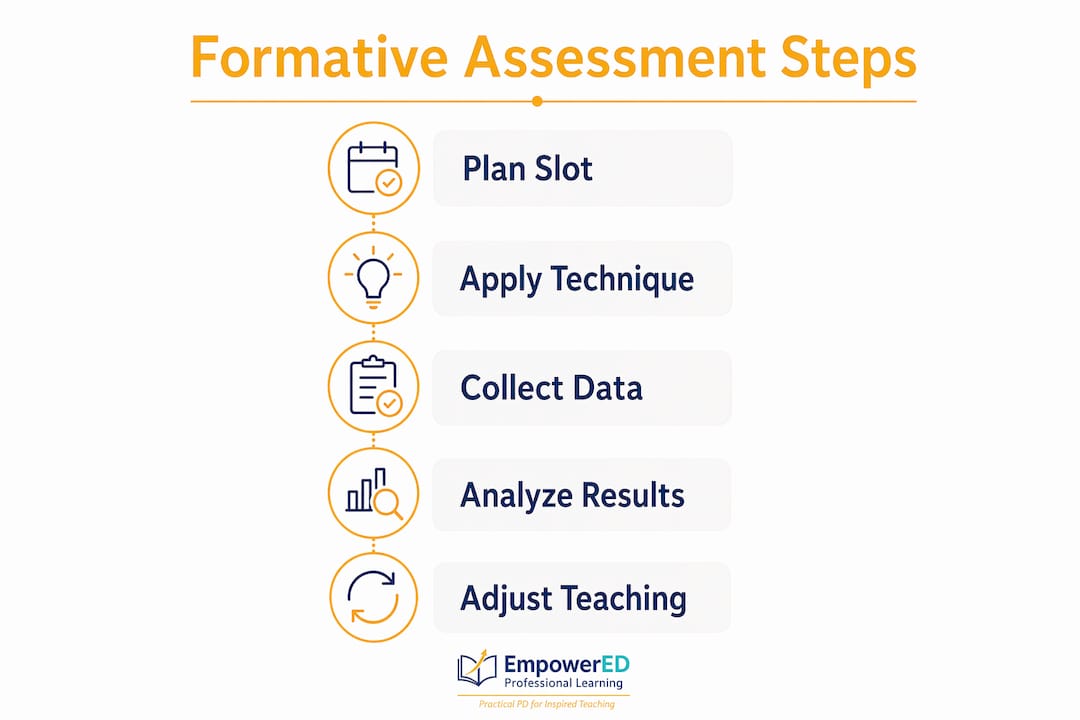
- Align each check to a specific learning objective. Before writing your lesson plan, identify the one concept students must understand by the end of class. Design your formative check around that concept only. Broad questions produce vague data.
- Assign a moment in the lesson for each check. The opening five minutes work well for activating prior knowledge (a quick poll or warm-up question). The middle of the lesson suits Think-Pair-Share or a targeted question. The final five minutes are ideal for exit tickets.
- Act on the data before the next lesson. Formative assessment functions as a real-time navigator only when teachers use the data immediately to adjust instruction. Sort exit tickets into three piles: got it, almost, not yet. Spend the first five minutes of the next class addressing the “not yet” group directly.
- Manage feedback without heavy grading. Color-coded formative feedback improves planning speed and clarity. Teachers rarely assign points to formative work. Instead, use a simple understand/partial/not yet sort to plan your next instructional move.
- Include every student, not just the vocal ones. Shy students and English language learners often go unheard in whole-class discussions. Written responses, anonymous digital polls, and partner talk structures give every student a voice.
Pro Tip: Build a two-minute “formative slot” into your lesson plan template. When it appears on your planning doc, you are forced to decide what you will check and how. That small habit prevents formative assessment from becoming an afterthought.
The table below shows how different formative methods map to lesson moments and workload level.
| Technique | Best lesson moment | Teacher workload |
|---|---|---|
| Exit ticket | Lesson close | Low (5-minute sort) |
| Think-Pair-Share | Mid-lesson | Very low (observe and listen) |
| Digital poll | Opening or mid-lesson | Very low (automated scoring) |
| One-minute paper | Lesson close | Low (skim for patterns) |
| Observation checklist | Group work or lab | Low (real-time recording) |
What tools and digital resources support formative assessment in daily lessons?
Technology makes real-time assessment tools faster and more inclusive. The right platform collects responses from every student simultaneously, scores them automatically, and displays results in seconds.
Platforms worth knowing:
- Mentimeter generates live word clouds, polls, and multiple-choice questions projected on screen. Students respond on any device. Results appear instantly.
- Kahoot turns review questions into a competitive game. Engagement is high, and the post-game report shows which questions stumped the most students.
- QR Quizzer lets you post a QR code on the board or a worksheet. Students scan and complete a short quiz on their phones. QR codes in the classroom reduce setup time and work well for stations-based learning.
- Google Forms with response tracking gives you a spreadsheet of student answers in real time, sortable by correct and incorrect responses.
The comparison below addresses a question many educators ask: does digital formative assessment work as well as face-to-face?
| Format | Strengths | Limitations |
|---|---|---|
| Onsite, face-to-face | Stronger retention and communication skill development | Requires physical materials or classroom setup |
| Online/digital | 100% participation, anonymous, instant data | Less effective for complex skill demonstration |
Face-to-face formative assessment improved summative exam performance more than online-only models, which means digital tools work best as a complement to in-person checks rather than a replacement. A practical approach is to use digital polls for anonymous data collection and save observation checklists or Think-Pair-Share for the relational, in-person moments that build deeper understanding.
Automated scoring removes the grading bottleneck entirely for multiple-choice and short-answer formats. That frees you to focus on the qualitative data that only you can interpret, like what you observe during group work or what patterns appear in written exit tickets.
Common challenges and best practices when using formative assessments daily
Even well-designed classroom feedback practices fail when implementation habits undermine the data. These are the most common pitfalls and how to avoid them.
- Sample bias from vocal students. When teachers call on raised hands, they hear from the same five students every time. Simultaneous response techniques like whiteboards, digital polls, and response cards prevent this by requiring every student to answer at once. The data you get reflects the whole class, not the most confident learners.
- Treating formative assessment as data collection rather than instruction. Collecting exit tickets and filing them away is not formative assessment. The value comes from acting on what you find. Formative assessment is a scaffold that helps students identify knowledge gaps and track progress, but only when teachers respond to the evidence.
- Using the same format every day. Repetition breeds disengagement. Spacing varied practice over multiple days produces better retention than intensive single-session practice. Mix written, verbal, digital, and visual response formats across the week.
- Overloading students with feedback. Too much written feedback on low-stakes work creates anxiety and takes hours to produce. A simple “not yet / almost / got it” stamp or color code communicates what students need without overwhelming them or you.
- Skipping student self-assessment. When students rate their own understanding before you check theirs, they develop metacognitive skills and take ownership of their learning. A simple thumbs up/sideways/down or a one-sentence self-reflection takes thirty seconds and pays dividends in student agency.
Pro Tip: Once a week, share anonymized class-wide results with students. Show them the poll data or the exit ticket patterns. When students see that 40% of the class missed the same concept, they stop feeling alone in their confusion and start engaging more honestly in the next check.
Key takeaways
Formative assessment techniques work in daily lessons because they generate immediate, specific data that teachers can act on before the next class period, directly raising both engagement and achievement.
| Point | Details |
|---|---|
| Daily checks drive results | Consistent formative strategies correlate with a 31.7% engagement increase and 25.3% achievement gain. |
| Act on data immediately | Sorting exit tickets into three groups and adjusting the next lesson is the core of effective formative practice. |
| Use simultaneous responses | Whiteboards, digital polls, and response cards capture data from every student, not just vocal ones. |
| Mix formats across the week | Rotating techniques like exit tickets, Think-Pair-Share, and digital polls prevents disengagement and improves retention. |
| Digital tools complement, not replace | Face-to-face formative checks produce stronger retention; digital platforms add speed, anonymity, and 100% participation. |
Why formative assessment changed how I plan every lesson
I spent the first few years of my career treating assessment as something that happened after teaching. Tests came at the end of a unit. Quizzes came on Fridays. I thought I was measuring learning. What I was actually doing was measuring what had already been lost.
The shift happened when I started treating every lesson as a feedback loop. An exit ticket on a Tuesday told me that two-thirds of my students had not grasped the concept I thought I had taught clearly. Without that data, I would have moved on Wednesday and built the next lesson on a foundation that was not there. With it, I redesigned the opening of Wednesday’s class in about ten minutes.
What I have found over years of working with educators is that the technique matters less than the habit. A traffic light card used consistently beats a sophisticated rubric used once a month. The educators who see the biggest gains are not the ones with the most elaborate systems. They are the ones who check understanding every single day and do something with what they find.
My advice: start with one technique. Run it for two weeks. Look at the data. Adjust one thing. Then add a second technique. You do not need to overhaul your practice. You need to build a daily habit of listening to what your students are telling you through their responses.
Reflective teaching practices grow from that habit. When you review your exit tickets on a Friday afternoon and notice the same misconception appearing across three class periods, you are not just grading. You are becoming a more precise, more responsive teacher. That is the real payoff.
— Brian Koster, Ed.D.
Deepen your formative assessment practice with Empoweredpl
Knowing the techniques is the starting point. Applying them confidently across different grade levels, subjects, and learning environments takes structured professional learning.
Empoweredpl offers targeted online courses built specifically for K-12 educators who want to move from theory to practice fast. Courses cover formative assessment, data literacy, hybrid engagement, and AI-powered classroom strategies. Each course is designed for immediate classroom application, so you leave with tools you can use the next day. Educators who have completed Empoweredpl courses consistently report stronger student participation and greater confidence in their instructional decisions. Explore the full course catalog and find the right fit for your immediate needs at Empoweredpl.
FAQ
What is formative assessment in K-12 classrooms?
Formative assessment is any low-stakes check used during instruction to monitor student understanding and guide teaching decisions. Common examples include exit tickets, digital polls, Think-Pair-Share, and observation checklists.
How often should teachers use formative assessment techniques?
Daily use is recommended. Brief formative checks taking two to five minutes provide real-time instructional data without adding grading burden, making daily implementation practical for most K-12 teachers.
Do formative assessments need to be graded?
No. Teachers rarely assign points to formative work. A color-coded or understand/partial/not yet sort gives you the planning data you need in minutes without creating a grading backlog.
How do digital tools improve formative assessment?
Platforms like Mentimeter, Kahoot, and QR Quizzer collect responses from every student simultaneously, score them automatically, and display results in seconds. This supports 100% participation and gives teachers instant data to act on.
What is the biggest mistake teachers make with formative assessment?
The most common error is collecting data without acting on it. Formative assessment only improves outcomes when teachers use the results immediately to adjust instruction before the next lesson.