The hybrid learning model is defined as a teaching approach that delivers real-time instruction to both in-person and remote students simultaneously, combining synchronous classroom sessions with asynchronous online components. Also called the blended learning model in some contexts, hybrid instruction has moved well beyond pandemic necessity. Three in four universities worldwide have now adopted some form of hybrid learning. That number signals a permanent shift in how schools and institutions think about instruction. For K-12 educators and administrators, understanding exactly what this model requires, and how it differs from related approaches, is the first step toward implementing it well.
What is a hybrid learning model in k-12 classrooms?
The hybrid learning definition centers on one core feature: some students attend class in person while others join the same session virtually, at the same time. This is what separates hybrid from fully online or fully in-person instruction. Hybrid learning delivers both synchronous and asynchronous elements within the same course structure.
In a typical K-12 setting, the hybrid model in education takes one of two main forms.
The first is simultaneous hybrid instruction, where a teacher leads a live lesson and remote students join via platforms like Zoom or Google Meet. The second is the A/B rotation schedule, where students alternate between in-person and remote days on a set cycle. Research suggests that rotation schedules outperform simultaneous live instruction because each setting gets purpose-built activities rather than a split-attention compromise.
Here is how the most common hybrid model variants compare:
| Model Type | In-Person Component | Remote Component | Synchronous? |
|---|---|---|---|
| Simultaneous Hybrid | Live classroom instruction | Students join via video call | Yes |
| A/B Rotation | Alternating in-person days | Asynchronous tasks on remote days | Partial |
| Purpose-Built Hybrid | Hands-on, lab, or discussion work | Independent digital projects | Mixed |
| Station Rotation | Small group rotations in class | One station is online | Yes, partially |
Pro Tip: If you are new to hybrid instruction, start with an A/B rotation schedule. It gives you time to design distinct lessons for each setting rather than trying to teach two groups at once.
Asynchronous components typically include recorded video lessons, digital assignments in platforms like Google Classroom or Canvas, and self-paced review activities. Synchronous components include live discussions, direct instruction, and real-time formative checks. The strongest hybrid classrooms use both, with each serving a clear instructional purpose.
What are the benefits of hybrid learning for students and educators?
Hybrid learning, when designed intentionally for specific learner populations, is a rigorous educational pathway, not a fallback option. That distinction matters. Schools that treat hybrid as a temporary fix tend to underinvest in design and training. Schools that treat it as a permanent model see measurable gains.
The advantages of hybrid education include:
- Access for diverse learners. Rural students, medically fragile students, and student athletes can participate fully without sacrificing instructional quality.
- Flexible pacing. Asynchronous components allow students to revisit content, which benefits learners who need more processing time.
- Customizable learning paths. Teachers can assign differentiated digital tasks to remote students while working with a smaller in-person group.
- Reduced class density. A/B rotation schedules cut physical classroom numbers, which supports both safety and small-group instruction.
- Educator schedule flexibility. Hybrid structures create space for teachers to conduct small-group work, intervention sessions, and professional collaboration.
“Virtual and hybrid learning models designed around student needs foster strong academic outcomes and connected communities.” — Getting Smart, 2026
Synchronous hybrid settings also support inclusion by accommodating students managing family responsibilities, work schedules, or health conditions. This is especially relevant for older K-12 students in grades 9–12 who balance school with part-time jobs or caregiving. Measuring success in these models requires updated tools. New success indicators like standards progression, credit accumulation, and skill demonstration replace traditional seat-time metrics. That shift gives educators more accurate data on what students actually know.
What challenges do educators face when implementing hybrid learning?
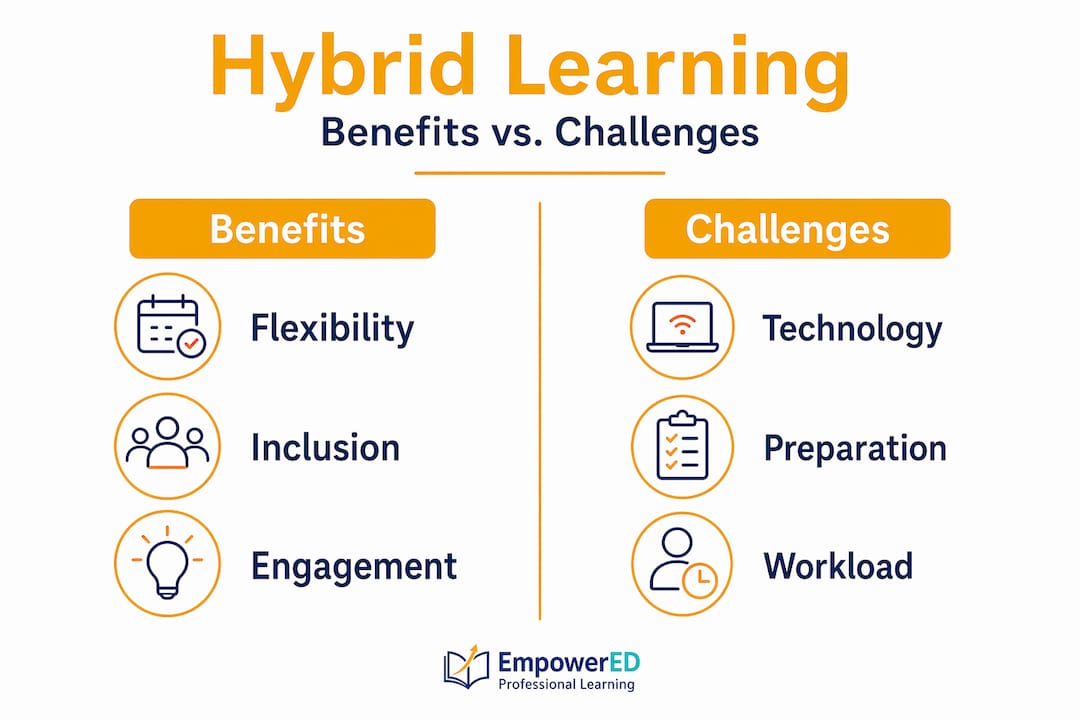
The biggest obstacle in hybrid implementation is not technology. Failure to provide ongoing professional development causes more hybrid teaching failures than any technical issue. Teachers who receive one-time training and no follow-up support struggle to maintain quality instruction across both settings.
Common challenges fall into three categories:
- Increased preparation time. Designing two distinct lesson experiences, one for in-person and one for remote, requires significantly more planning than a single-format lesson. Without scheduling support, this leads to teacher burnout.
- Digital equity gaps. Not all students have reliable internet access or devices at home. Schools must audit device availability and connectivity before launching any hybrid program.
- Classroom management complexity. Monitoring engagement across a live classroom and a video call simultaneously is a skill that requires deliberate practice and specific strategies.
A review of hybrid and blended learning programs identified three critical success factors: technological accessibility, faculty skill, and strong institutional backing. All three must be present. Addressing only one or two produces inconsistent results.
Practical solutions for administrators include building collaborative planning time into teacher schedules, providing instructional coaches who specialize in hybrid design, and piloting hybrid models in one grade level before scaling. For teachers, learning to use classroom routines that work across both settings reduces daily cognitive load and keeps transitions predictable for students.
Pro Tip: Build a simple hybrid lesson template with three sections: what students do in person, what students do remotely, and how you will check understanding for both groups. Consistent structure saves planning time every week.
Hybrid models also require systemic school adaptations including rethinking teacher workload and scheduling. Administrators who treat hybrid as an add-on to existing structures will see staff resistance. Those who redesign schedules to support it will see buy-in.
How does hybrid learning differ from blended and other models?
The terms hybrid learning and blended learning are often used interchangeably, but they describe different instructional structures. Understanding the distinction helps educators and administrators choose the right approach and communicate it clearly to families and staff.
Blended learning integrates online and in-person instruction, but all students are typically in the same physical location. Online activities supplement face-to-face instruction rather than replacing it for some students. Hybrid learning splits the student group, with some attending in person and others attending remotely, often at the same time.
The flipped classroom model is a subset of blended learning where students consume content at home via video and use class time for practice and discussion. The station rotation model divides students into groups that rotate through different learning stations, one of which is an online activity.
| Model | Student Location | Synchronous Delivery | Primary Technology Use |
|---|---|---|---|
| Hybrid | Split: in-person and remote | Yes, simultaneously | Video conferencing, LMS |
| Blended | All in-person | Partial | LMS, digital practice tools |
| Flipped Classroom | All in-person (class time) | Yes | Video content, LMS |
| Station Rotation | All in-person | Partial | Online learning stations |
Choosing the right model depends on your school’s goals and student population. Hybrid works best when consistent physical attendance is not possible for all students. Blended and flipped models work well when all students can be present but benefit from more personalized digital practice. Formative assessment techniques apply across all four models and help teachers monitor understanding regardless of format.
Key takeaways
The hybrid learning model succeeds when schools invest in intentional instructional design, ongoing teacher development, and systemic scheduling support rather than treating it as a temporary or supplemental arrangement.
| Point | Details |
|---|---|
| Hybrid learning definition | Hybrid instruction delivers simultaneous real-time lessons to in-person and remote students with both synchronous and asynchronous components. |
| A/B rotation outperforms simultaneous teaching | Purpose-built lessons for each setting produce better engagement than splitting attention across two live groups at once. |
| Professional development is the top success factor | Lack of ongoing faculty training causes more hybrid failures than technology problems. |
| Hybrid differs from blended learning | Blended keeps all students in one location; hybrid splits the group between physical and virtual attendance. |
| New success metrics are required | Standards progression and skill demonstration replace seat-time measures in effective hybrid programs. |
The design gap nobody talks about
I have worked with dozens of K-12 schools attempting to implement hybrid learning, and the pattern is consistent. Schools invest in cameras, microphones, and learning management systems. Then they wonder why teachers are exhausted and students are disengaged six weeks in.
The problem is almost never the technology. The problem is that nobody redesigned the instruction. Teachers are expected to run a live classroom and monitor a video call at the same time, with no additional planning time and no change to their existing schedule. That is not a hybrid model. That is two jobs at once.
The schools that get this right do something different from the start. They treat in-person days and remote days as distinct instructional experiences with different purposes. In-person time is for collaboration, hands-on work, and direct teacher interaction. Remote time is for independent practice, reflection, and self-paced content. When those two experiences are designed to complement each other rather than mirror each other, the model works.
I also want to push back on the idea that hybrid learning is inherently harder to manage than traditional instruction. It is harder to manage badly. With clear hybrid learning routines and consistent procedures, students in both settings know exactly what to do and when. That predictability reduces behavioral issues and increases time on task.
The schools that struggle most are the ones where leadership treats hybrid as a logistics problem rather than a pedagogical one. Buying better equipment does not fix weak instructional design. Investing in teacher learning does.
— Brian Koster, Ed.D.
Build your hybrid teaching skills with empowered professional learning
Knowing the theory behind hybrid instruction is one thing. Executing it confidently in your classroom is another. Empowered Professional Learning offers targeted professional development courses built specifically for K-12 educators navigating the demands of hybrid and online teaching.
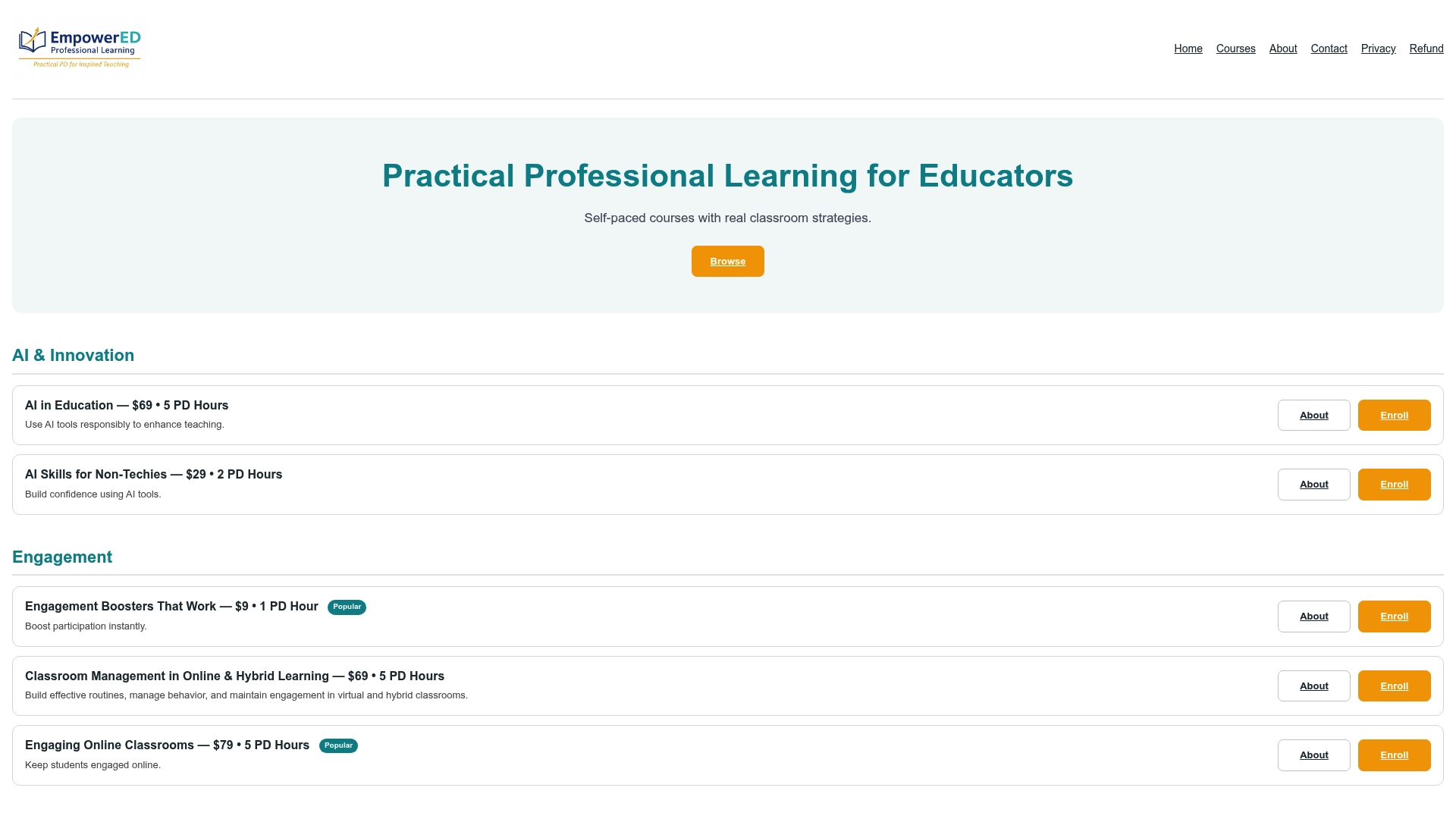
The Hybrid Learning Routines and Procedures for K-12 Teachers course gives you a practical framework for structuring both in-person and remote learning days so students stay engaged and you stay organized. For educators ready to go further, the AI in Education course shows you how to use AI tools to personalize learning across hybrid settings. Empowered Professional Learning also offers the Introduction to Effective Online Teaching course for $79 and 5 PD hours, designed to build a strong foundation for delivering effective online instruction. These courses are practical, self-paced, and directly applicable to your classroom starting day one.
FAQ
What is the hybrid learning model in simple terms?
The hybrid learning model is a teaching format where some students attend class in person while others join the same session remotely, with both synchronous and asynchronous learning components built in.
How does hybrid learning work on a daily schedule?
Most K-12 schools use an A/B rotation schedule where students alternate between in-person and remote days, or a simultaneous format where in-person and virtual students attend the same live lesson via video conferencing tools like Zoom or Google Meet.
What is the difference between hybrid learning vs traditional learning?
Traditional learning requires all students to be physically present in a classroom. Hybrid learning allows some students to participate remotely, offering greater flexibility and access for diverse learner populations.
What are the biggest challenges of hybrid learning for teachers?
Increased preparation time, digital equity gaps, and the complexity of managing two simultaneous learning environments are the top challenges. Ongoing professional development addresses these more effectively than technology upgrades alone.
Is hybrid learning the same as the blended learning model?
No. Blended learning keeps all students in one physical location and supplements in-person instruction with online activities. Hybrid learning splits the student group between in-person and remote attendance, often at the same time.