Classroom PBIS is a tiered system of teaching, modeling, and reinforcing clear behavioral expectations rather than reacting to misbehavior after it happens. The single fastest way to start is to pick three to five positively stated expectations, like “use kind words” or “raise your hand to speak,” and teach them explicitly this week. Everything else in this article, from precorrections to fidelity checks, builds on that first move.
TL;DR:
- Consistently teaching three to five positively stated expectations improves classroom behavior, especially when routines are explicitly modeled and practiced regularly.
- Targeted supports like check-in/check-out or social skills groups should be added if universal practices do not yield improvements within two to three weeks.
- Daily data tracking of praise and corrections, even informally, can reveal whether strategies like precorrections or response opportunities are effective.
- Strategies such as precorrections before transitions, specific praise, active supervision, and calm scripts can be implemented immediately without additional materials.
- Fading or intensifying supports should be based on data over two-week cycles, with extra supports added for students whose behavior remains disruptive despite universal strategies.
Table of Contents
- What Is Classroom PBIS and How Do the Three Tiers Work?
- Why Does PBIS Matter for Engagement and Equity?
- The Critical Features Every Classroom PBIS System Needs
- Classroom-Ready PBIS Strategies You Can Use Tomorrow
- Implementing PBIS Across Tiers: When to Intensify Support
- Adapting PBIS for Neurodiverse Learners and Students With Disabilities
- Tracking Data and Checking Fidelity Without Extra Paperwork
- Where Practical PD Meets These Classroom Strategies
- An Editorial Take on What Actually Moves the Needle
- A Short Course Built for This Exact Problem
- Sources
- FAQ
What Is Classroom PBIS and How Do the Three Tiers Work?
Classroom PBIS, sometimes called positive classroom behavior support or positive proactive classroom management, is the application of schoolwide Positive Behavioral Interventions and Supports at the classroom level. It’s a framework, not a curriculum. Teachers use evidence-based practices to teach behavior the same way they teach reading or math, with instruction, practice, and feedback.
The structure runs on three tiers, and understanding what each one covers keeps you from over-engineering support for kids who don’t need it, or under-supporting the ones who do.
- Tier 1 (universal): Expectations, routines, and acknowledgement systems that apply to every student in the room, designed to meet the needs of roughly 80% of students.
- Tier 2 (targeted): Small-group or check-in supports for students who need more structure than Tier 1 provides, like check-in/check-out systems.
- Tier 3 (individualized): Function-based, personalized plans for students whose behavior requires deeper analysis and a dedicated team.
Classroom PBIS doesn’t exist in isolation. It’s the classroom-level layer of a school’s broader multi-tiered system of support, which means your building’s behavior matrix, office referral process, and data systems should all connect back to what happens in your room. If your school hasn’t formally adopted PBIS, you can still run these practices well. The framework works at the classroom level even before it’s a building-wide initiative.
Why Does PBIS Matter for Engagement and Equity?

Classrooms running strong Tier 1 practices see fewer disruptions, more instructional time, and better academic engagement, largely because students spend less time being redirected and more time actually working. That’s not a vague benefit. It shows up in fewer office referrals, fewer suspensions, and a measurably calmer room.
The equity angle matters just as much. Students with disabilities are disproportionately removed from instruction through exclusionary discipline, and when PBIS is implemented with fidelity, that gap narrows, along with reductions in restraint and seclusion incidents.
Statistic Callout: A study on classroom implementation found that teachers operating at 75%, 85%, and above 90% fidelity produced similarly strong gains in class-wide academic engagement. You don’t need perfection to see results. You need consistency.
That last point should be a relief if you’ve been putting off PBIS because it felt like an all-or-nothing commitment. It isn’t.
The Critical Features Every Classroom PBIS System Needs
Four systems form the backbone of classroom PBIS, and skipping any one of them weakens the whole structure.
- Expectations: Create three to five positively stated, observable expectations (“walk in the hallway,” not “don’t run”) and post them where students can see them daily.
- Routines: Teach routines the way you’d teach a math procedure, through modeling, guided practice, and independent practice, then refresh them after breaks or when data shows a slip.
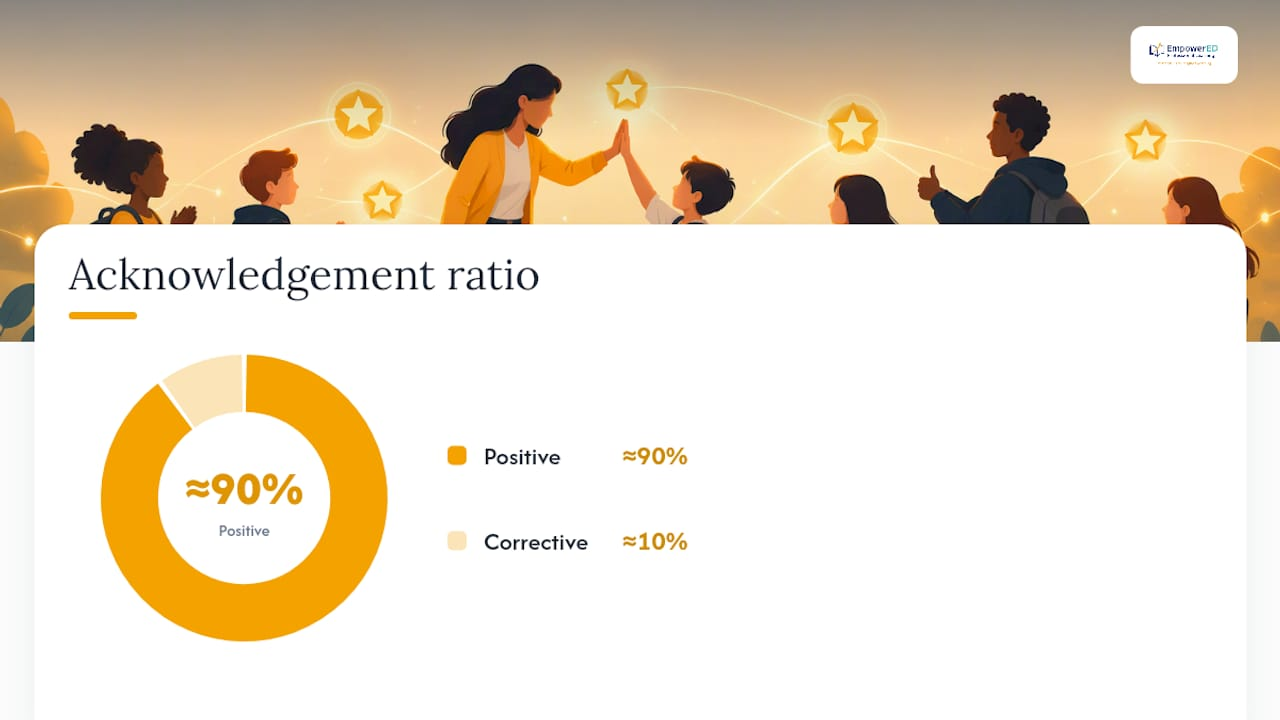
- Acknowledgements: Use behavior-specific praise (“I noticed you helped Marcus pick up his pencils, thank you”) and aim for a ratio of more than 9 positive interactions to every 1 corrective one.
- Environment and supervision: Arrange furniture so you can see every student and move freely, and actively supervise by scanning and circulating rather than staying at your desk.
Pro Tip: Post your expectations as “I can” statements (“I can use a calm voice”) instead of rules. Students respond better to identity language than to a list of prohibitions.
These four features work together. A beautifully worded expectation means nothing if you never teach the routine that puts it into action, and a well-taught routine fades fast without consistent acknowledgement. For a deeper look at how physical setup affects behavior, classroom noise management strategies pair well with active supervision routines.
Classroom-Ready PBIS Strategies You Can Use Tomorrow
Here’s where theory turns into Monday morning. These strategies are the ones with the strongest track record for reducing disruptions without adding to your prep time.
- Use precorrections before transitions. A precorrection is a quick, specific reminder delivered right before a moment that typically goes wrong, like lining up for lunch. Try: “In thirty seconds we’re lining up. Remember, hands to yourself and quiet voices.” Precorrections work better than relying on rewards after the fact, because they prevent the disruption instead of responding to it.
- Increase opportunities to respond. Students who answer questions, use response cards, or turn and talk frequently stay more engaged and misbehave less. Aim for multiple response opportunities per minute during direct instruction rather than calling on one student at a time. Classroom questioning strategies can help you build this into your lesson delivery without slowing the pace.
- Deliver behavior-specific praise, not generic praise. “Good job” tells a student nothing repeatable. “You got started on your assignment right when the bell rang” tells them exactly what to do again. Pair this with brief, calm error corrections: state the expected behavior, don’t lecture, and move on.
- Build active supervision into your movement. Walk a predictable but varied path around the room, scan constantly, and position yourself near students who need more support during independent work. This alone prevents a large share of low-level disruptions before they start.
- Set up a simple, equitable reinforcement system. Token economies, class points, or a “caught being good” jar work, but only if every student has a realistic path to earn recognition. Avoid systems that only reward the students who were already compliant.
- Use calming corners for regulation, not punishment. A designated space with a timer, a few sensory tools, and clear reentry expectations gives students a way to self-regulate. Pairing this with brief mindfulness routines gives students a repeatable script for calming down.
- Keep mini-scripts ready for common flashpoints. For a student refusing to start work: “I see you’re not ready. Take two minutes, then let’s check in.” For call-outs: a nonverbal signal paired with, “I’ll call on you when your hand is up.” Scripted language keeps your tone calm and consistent, which matters more than the exact words.
Pro Tip: Write your top three mini-scripts on a sticky note and keep it on your desk for the first two weeks of a new routine. You’ll use it more than you expect, and it keeps your language consistent even on hard days.
None of these strategies require new materials or a schedule overhaul. They require repetition, and that’s exactly why the IES practice guide recommends daily teaching of expectations in the early weeks, tapering to refreshers once behavior stabilizes. Teachers who bundle these techniques with strong instructional design, rather than treating behavior management as separate from teaching, tend to see the biggest gains, since protecting instructional time is really the whole point.
Implementing PBIS Across Tiers: When to Intensify Support
Tier 1 should be running before you think about Tier 2, because a shaky universal foundation makes targeted supports harder to judge. Here’s a practical launch and escalation sequence.
- Launch Tier 1: Post expectations, teach routines explicitly for the first two weeks, and track your praise-to-correction ratio informally.
- Maintain Tier 1: Refresh routines after long breaks, holidays, or whenever data shows a spike in a specific location or time of day.
- Add Tier 2 when needed: For students who don’t respond to universal supports after two to three weeks, try check-in/check-out systems (a quick morning and afternoon check with an adult) or small-group social skills instruction.
- Escalate to Tier 3 when patterns persist: If a student’s behavior remains disruptive despite Tier 2 support, coordinate with your school’s team on a Functional Behavior Assessment and Behavior Support Plan. This is a team decision, not a solo one.
- Set a review timeline: Give any new support two weeks before deciding whether to intensify, fade, or adjust it. Two-week cycles of teach, implement, and review give you enough data without dragging out an approach that isn’t working.
The decision rule is simple: if a student needs more than what the whole class gets, add support rather than lowering expectations. Fading works the same way in reverse. Once a student consistently meets expectations without the extra check-in, pull back gradually rather than stopping cold.
Adapting PBIS for Neurodiverse Learners and Students With Disabilities
Tier 1 practices should flex for every student in the room, not just the ones without an IEP. Visual supports, task analysis (breaking a routine into smaller visible steps), and assistive technology all belong in universal instruction, not as separate add-ons.
Tier 2 and Tier 3 supports need to work alongside IEP services, never in place of them. That means real collaboration with your special education team when designing a behavior plan, so the classroom system and the IEP goals reinforce each other instead of pulling in different directions.
- Use prompting schedules and graduated prompting (verbal cue, then gesture, then physical guide) for students learning new routines.
- Choose reinforcers based on individual student preference and accessibility, not a one-size-fits-all reward menu.
- Set expectations collaboratively with families, accounting for cultural and linguistic differences in what “respectful” or “appropriate” behavior looks like at home.
- Loop families in early rather than after a problem develops. A quick note home about a new classroom routine builds consistency between school and home.
For strategies built specifically around IEP alignment, see autism classroom strategies tied to IEPs. And when a partner classroom or grade team is co-designing expectations with students, the three characteristics of effective learning offer a useful lens for building in student agency from the start.
Tracking Data and Checking Fidelity Without Extra Paperwork
You don’t need an elaborate tracking system to know whether your PBIS strategies are working. A one to two minute daily tally of praise statements versus corrections, or a simple frequency count of a specific disruptive behavior, gives you enough signal to act.
- Frequency counts: Tally how often a specific behavior happens during a set period, like transitions or independent work time.
- Momentary time sampling: Glance at the class every few minutes and note whether students are on task. This works well for whole-class engagement checks.
- Quick fidelity self-assessment: Compare your daily practice against Tiered Fidelity Inventory classroom items, like whether expectations are posted and taught, and whether acknowledgement happens regularly.
Statistic Callout: Teachers cite intervention compatibility, time required, and materials needed as the top three barriers to sticking with an evidence-based practice. Building your data collection around a one-minute daily habit removes two of those three barriers before they stop you.
If your informal data shows a strategy isn’t moving the needle after a few weeks, that’s the moment to loop in an instructional coach or your school’s PBIS team rather than quietly abandoning the approach.
Where Practical PD Meets These Classroom Strategies
This article draws on the same evidence base that shapes Empowered Professional Learning’s course design: the IES practice guide, the Center on PBIS, and Tiered Fidelity Inventory research on classroom procedures. Brian Koster, Ed.D., who informs the perspective in this piece, brings a classroom-tested lens to translating that research into steps teachers can use the same day.
Several Empowered Professional Learning courses map directly onto what’s covered here. Engagement Boosters That Work reinforces opportunities-to-respond and acknowledgement systems. Data Literacy for Teachers builds on the fidelity-tracking habits described above. Classroom Management in Online & Hybrid Learning extends Tier 1 systems into remote settings. Each course includes a certificate that may qualify for PD credit, depending on district requirements.
An Editorial Take on What Actually Moves the Needle
Most PBIS rollouts fail not from lack of buy-in but from trying to do everything at once. Pick three priorities: teach your expectations explicitly, increase opportunities to respond during instruction, and run a weekly two-minute data check on your praise-to-correction ratio. When a strategy stalls, the fix is usually more repetition, not a new strategy. Try one practice, like precorrections, for two full weeks before judging it. Behavior change is slow to show, then sudden.
— Brian Koster, Ed.D.
A Short Course Built for This Exact Problem
Reading about precorrections and opportunity-to-respond ratios is one thing. Having a guided plan to put them into your classroom this week is another. The courses are designed and taught by educators, built around practical strategies you can apply immediately rather than theory you’ll forget by Friday.
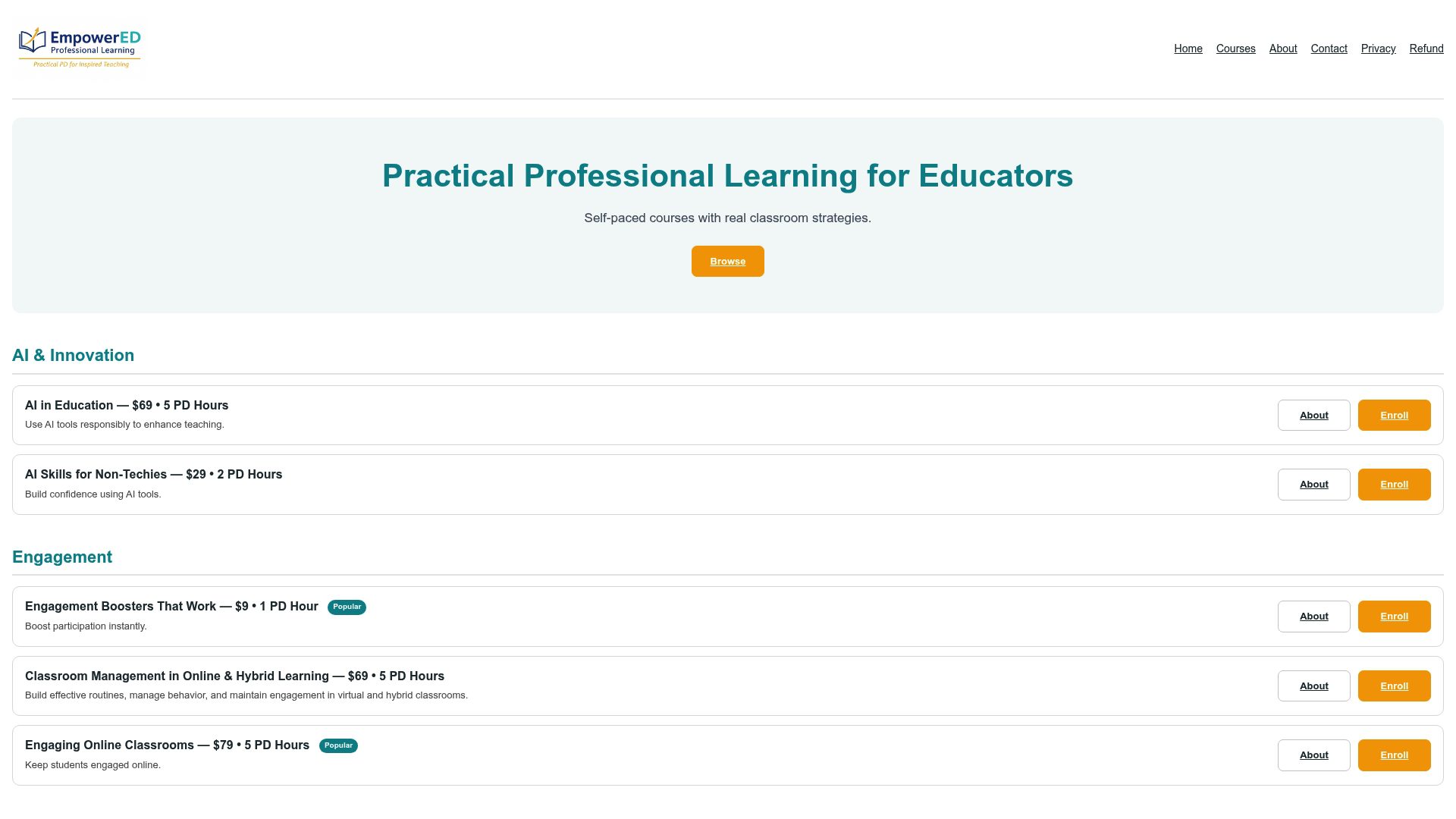
Engagement Boosters That Work walks through the exact Tier 1 techniques covered in this article, praise ratios, active supervision, response opportunities, with a quick implementation plan you can start using the same week. It’s one of the free courses available through Empowered Professional Learning, making it an easy first step whether you’re testing PBIS solo or bringing it to your grade-level team. Bulk licensing is available alongside individual enrollment for schools or districts looking to train multiple teachers at once. Visit the Engagement Boosters That Work course page to see what’s included and enroll today.
Sources
- Center on PBIS | Classroom PBIS
- Teacher-delivered behavioral interventions in grades K–5 (Practice Guide)
- PBISApps | Anatomy of a framework part 5: classroom procedures
- Implementing PBIS to support students with disabilities (handout)
FAQ
What Are Some Examples of PBIS Strategies?
Common examples include posting three to five positively stated expectations, using behavior-specific praise, delivering precorrections before transitions, and running check-in/check-out systems for students needing extra support. Engagement Boosters That Work walks teachers through several of these with ready-to-use implementation plans.
What Are the Big 8 Classroom Management Techniques?
There’s no single universally agreed list, but the strategies consistently named across practice guides include posted expectations, taught routines, active supervision, high rates of opportunities to respond, behavior-specific praise, brief error correction, a strong positive-to-corrective ratio, and consistent data collection. These align closely with the top ten practices recommended for classroom PBIS.
What Are 10 Effective Classroom Management Strategies?
Effective strategies include designing an accessible environment, posting and teaching expectations, using precorrections, increasing opportunities to respond, delivering specific praise, correcting errors calmly, maintaining a high positive-to-corrective ratio, actively supervising, collecting simple data, and adjusting supports based on that data. The 15 classroom management techniques guide breaks several of these down further for K to 12 teachers.
What Are the Four Pillars of PBIS?
The four critical components of classroom PBIS are creating a positive environment, actively teaching and promoting social, emotional, and behavioral growth, monitoring implementation fidelity, and using data to guide decisions. These pillars come directly from the PBISApps framework overview on classroom procedures.
How Much Does Empowered Professional Learning’s PBIS Training Cost?
Engagement Boosters That Work is available through Empowered Professional Learning’s free course offerings, with current pricing and enrollment details listed on the Engagement Boosters That Work page. Other related courses, like Data Literacy for Teachers, are priced individually on the professional learning catalog.