The teachers who see the fastest turnaround with reluctant readers do six things: they hand over book choice, build social reading time into the week, run low-pressure routines like First Chapter Fridays, teach comprehension strategies explicitly instead of assuming students already know them, pair audiobooks with print, and keep assignments short enough to protect a struggling reader’s dignity. A meta-analysis of reading motivation interventions found that programs designed to trigger genuine interest produced the largest gains in both motivation and comprehension, ahead of programs built around rewards or compliance.
Here is where to start this week:
- Offer a choice board or free-choice reading minutes every day, even ten minutes counts.
- Set up micro book clubs so reading becomes a conversation, not a solo assignment.
- Run a weekly low-pressure routine like First Chapter Fridays with zero follow-up obligation.
- Teach purpose-setting, predicting, and monitoring as explicit, practiced skills.
- Pair audiobooks with printed text so decoding is not the only path into a story.
- Keep independent assignments short and interest-matched to avoid shutdown behavior.
Brian Koster, Ed.D., breaks down why these six moves work and how to sequence them below.
Key Takeaways
Reluctant readers engagement improves fastest when teachers combine genuine student choice with social reading structures and explicit, well-scaffolded strategy instruction, sustained over a full semester rather than a single unit.
| Point | Details |
|---|---|
| Interest beats compliance | Interventions that trigger genuine curiosity produce larger motivation and comprehension gains than reward-based approaches. |
| Choice drives effort | Rotating choice boards and free-choice minutes build ownership that compliance-based assignments cannot replicate. |
| Explicit scaffolding is non-optional | Purpose-setting, predicting, and monitoring must be modeled and practiced, not assumed as prior knowledge. |
| Low-pressure routines lower risk | First Chapter Fridays and paired audiobook reading reduce the fear of failure that drives avoidance. |
| Empowered Professional Learning builds the routine for you | Courses like Engagement Boosters That Work and UDL & Accessibility turn these strategies into ready-to-run classroom practice. |
Table of Contents
- What Classroom Strategies Actually Move Reluctant Readers Engagement?
- How Do You Build Routines That Normalize Reading?
- Teaching Reluctant Readers to Read Like Engaged Readers
- What Does the Research Say About Choice and Interest?
- Multimodal Supports That Take the Pressure Off Decoding
- Understanding the Psychological and Emotional Barriers Behind Reluctance
- Building Reading Confidence and Self-Efficacy
- How Family and Caregiver Involvement Shapes Reading Motivation
- How Socio-Economic and Cultural Factors Shape Reading Reluctance
- What Do Successful Intervention Programs Look Like?
- Training Teachers to Use Engagement Techniques Well
- Where EmpowerED PD Fits Into This Toolkit
- Sources
What Classroom Strategies Actually Move Reluctant Readers Engagement?
Not every strategy earns equal classroom time. Some tactics change a student’s relationship with reading within a week; others take a semester to show results. Rank your effort by which moves reduce anxiety fastest while building real skill underneath.
- Build a choice framework, not just a choice moment. Set up a rotating choice board with four to six categories (graphic novel, short story collection, high interest nonfiction, audiobook pairing) and let students pick weekly. Choice increases effort and persistence because students feel ownership over the outcome, not just the process, according to the ERIC practice guide on motivating adolescent readers.
- Run micro book clubs with defined roles. Groups of three to four students, 15 minutes twice a week, rotating roles like Discussion Leader and Connector. Keep the reading load light, one chapter or a handful of pages, so participation never depends on catching up.
- Build a daily audiobook and print pairing block. Ten minutes at the start of class where students follow along in print while listening. This models fluent phrasing for students who have never heard what skilled reading sounds like.
- Shrink assignments to protect dignity. Swap the five paragraph reading response for a single annotated passage plus one sentence of reaction. Reluctant readers disengage fastest when the visible gap between their output and a peer’s feels large.
- Script your invitations to participate. Instead of “who wants to share,” try “tell your partner one word that describes how this chapter felt.” Low-stakes prompts get quiet students talking without putting them on the spot.
Pro Tip: Rotate choice board categories every two to three weeks. Reluctant readers often need permission to abandon a book that isn’t working, and a fresh set of options makes that feel normal rather than like failure.
Treating reading as a social act, not a solitary compliance task, is one of the clearest levers in the research on cultivating a love of reading. Book clubs and shared read-alouds do more than fill time. They remove the spotlight from any one struggling reader.
How Do You Build Routines That Normalize Reading?
Routines work because they remove decision fatigue and repeated exposure to failure. A student who knows exactly what Friday looks like stops bracing for it.
Start with these three structural pieces:
- First Chapter Fridays. Read the opening chapter of a different book aloud each week, no follow-up required, no book report, no quiz. The goal is exposure to hooks, not completion, and that removed pressure is what makes students voluntarily pick books up later, according to guidance from Reading Rockets.
- A daily read-aloud window, even in secondary grades. Ten to fifteen minutes, same time each day, builds a shared vocabulary and modeled fluency that struggling readers rarely get elsewhere.
- A physical reading corner with low seating and visible variety. It signals that reading is a place you go, not just a task you complete at a desk.
Layer in turn-and-talks after every read-aloud segment and a simple shared annotation protocol (a sticky note for “surprised me,” another for “confused me”). Celebrate partial progress out loud: naming that someone finished a chapter, not just a book, keeps the routine feeling achievable rather than aspirational.
Teaching Reluctant Readers to Read Like Engaged Readers
Choice and routines lower the emotional barrier. Explicit instruction is what actually builds the skill underneath, as emphasized in Teaching reading and writing – EBC TEFL courses. Proficient readers set a goal before reading, predict what comes next, and monitor whether the text still makes sense, according to strategy research summarized by UC Davis’s Center for Educational Effectiveness. Reluctant readers rarely do this automatically. They need it modeled, then practiced, then faded.
Use a gradual release sequence across three stages:
- Model it out loud. Say the exact words: “Before I read this page, I’m asking myself what the character wants. That’s my purpose for reading.” Do this daily for a week before asking students to try it.
- Guide it together. Stop mid-paragraph and ask, “Does this still match what we predicted? What confused you just now?” Keep this to five minutes so it never feels like an interrogation.
- Release it to independent practice. Give students a sticky-note prompt: “Write your purpose before you read” and “Write one question you had halfway through.” Check these, don’t grade them.
A study comparing effective and typical teachers found that explicit instruction and feedback on engaged reader processes predicted stronger comprehension gains, and that fidelity to the sequence mattered as much as the sequence itself. When a student’s monitoring drifts, a quick return-to-purpose prompt, “What were you trying to find out here?”, works better than a generic reminder to “pay attention.”
Pro Tip: Keep guided practice under ten minutes. Reluctant readers disengage the moment a strategy lesson starts to feel like the assignment itself rather than a tool for reading it.
What Does the Research Say About Choice and Interest?
The evidence lines up cleanly behind one idea: interest is not a nice add-on, it is the mechanism. The meta-analysis on reading motivation interventions found that interest functioned as a significant positive moderator across studies. Programs designed to trigger genuine curiosity outperformed programs built around external rewards or simple time-on-task requirements, and those gains showed up in both motivation and comprehension scores.
Interventions that trigger student interest produced the largest positive effects on reading motivation and comprehension of any intervention type studied.
That same research found effect sizes varied by how long the intervention ran and who delivered it. Longer, sustained routines beat one-off activities, and elementary implementations often differed from secondary ones because older students carry more accumulated reading anxiety. Set expectations accordingly: a first-chapter routine or choice board won’t fix years of avoidance in a month, but it changes the trajectory faster than compliance-based fixes ever do.
Multimodal Supports That Take the Pressure Off Decoding
Not every barrier to reading engagement is motivational. Some students disengage because decoding itself drains all their working memory before comprehension even starts. Multimodal supports close that gap without lowering the intellectual bar.
- Use audiobooks paired with print during independent reading time so students hear correct phrasing while tracking words on the page.
- Try captioned video versions of a text’s opening scene to activate background knowledge before the reading begins.
- Build short text sets around one topic at multiple reading levels, so a struggling reader engages with the same content as peers.
- Use graphic organizers for plot or argument structure instead of requiring students to hold everything in memory.
- Set up a rotating station with headphones and tablets for five-minute audiobook previews before whole-class discussion.
Universal Design for Learning principles apply directly here: the goal is multiple paths to the same understanding, not a workaround. EmpowerED’s course on digital tools for student engagement walks through low-prep tech workflows that fit this exact use case.
Quick Checks to Monitor Engagement and Adjust Support
Monitoring reluctant readers doesn’t require elaborate data systems. A few low-burden checks tell you what you need to know:
- One-minute fluency checks every two weeks, tracked, not graded.
- A simple engagement rubric (eyes on text, page turns, voluntary comments) scored during independent reading.
- Exit tickets asking one question: “What’s one thing you understood today?”
- Reading logs that track minutes, not pages, to reduce pressure on slower readers.
If two consecutive checks show no movement, escalate: add small-group tutoring, swap the text for a better-matched interest level, or add a scaffold like a graphic organizer. Set micro-goals, “read three more minutes than last week”, and name the win out loud when a student hits it.
Understanding the Psychological and Emotional Barriers Behind Reluctance
Most reluctant readers are not lazy. They are protecting themselves from a predictable experience of failure. A student who has been called on to read aloud and stumbled in front of peers learns, correctly, that reading time is risk. That association doesn’t fade just because the school year changes or the reading level gets easier.
Three barriers show up again and again in classrooms. The first is learned helplessness: after repeated struggle, students stop trying because trying hasn’t paid off before, regardless of effort. The second is identity avoidance, students who have decided “I’m not a reader” and now defend that identity by refusing texts that might prove otherwise. The third is cognitive overload, where decoding demands so much working memory that comprehension never gets a chance to happen, leaving the student exhausted rather than engaged.

These barriers rarely announce themselves directly. A student who “doesn’t care” about reading is often a student who cares intensely and has decided not caring hurts less than trying and failing again. Teachers who treat disengagement as a motivation problem alone often miss that the real issue is self-protection.
The fix is not more encouragement. It’s changing the risk calculation. Low-stakes routines like partner reading, ungraded exit tickets, and choice boards lower the cost of trying. Over time, small, repeated low-risk successes rebuild a student’s willingness to be seen struggling with a text, which is the actual precondition for growth.
Building Reading Confidence and Self-Efficacy
Confidence in reading is built through evidence, not encouragement. Telling a struggling ninth grader “you’re a good reader” rarely lands, because the student has private data that contradicts it. What works instead is engineering small, visible wins the student can’t dismiss.
Start with texts slightly below a student’s frustration level so early success is close to guaranteed, then step up difficulty gradually as the student logs wins. Keep a visible progress marker, minutes read, chapters finished, questions answered correctly, so students see their own trajectory instead of relying on your praise alone. Praise the process specifically: “You caught your own confusion and reread that paragraph” builds more self-efficacy than “great job.”
Peer modeling matters more than most teachers use it. Watching a classmate stumble, self-correct, and keep reading normalizes the exact behavior a reluctant reader is afraid to display. Structured partner reading, where both students read aloud in turns and are explicitly told mistakes are expected, does this work quietly and consistently.
Self-efficacy research consistently points to mastery experiences, actual completed tasks, as the strongest driver of future effort, stronger than verbal persuasion or watching others succeed. That means the fastest path to confidence isn’t a pep talk. It’s stacking small, completed reading tasks the student can point to and say, honestly, “I did that.”
How Family and Caregiver Involvement Shapes Reading Motivation
Classroom strategies only carry a student so far if home life sends the opposite message. Family involvement doesn’t require caregivers to be strong readers themselves. It requires them to signal that reading matters and that the student’s effort is noticed.
Simple, low-barrier requests work better than elaborate reading logs that create friction. Ask families to talk about what a student read at dinner, not quiz them on it. Suggest audiobooks during car rides as a family reading option that removes the literacy demand from a caregiver who may struggle with print themselves. Send home a short list of high-interest, low-pressure titles rather than a required reading list, since choice at home matters as much as choice in class.
Caregivers who were reluctant readers themselves often carry their own school-based anxiety about reading, and that history shapes how they talk about it at home. A brief, judgment-free note explaining that struggle is a normal part of learning to read, not a sign something is wrong, can shift how a family responds to a student’s frustration. Schools that share specific, actionable ways to support reading at home, rather than generic “read more” messaging, see stronger follow-through because caregivers know exactly what to do.
How Socio-Economic and Cultural Factors Shape Reading Reluctance
Reading reluctance is not evenly distributed, and pretending otherwise leads to strategies that work for some students and quietly fail others. Access to books at home, print-rich environments, and even quiet space to read vary widely by household income, and students without that access start school-based reading tasks from a different baseline than peers who grew up surrounded by books.
Cultural representation matters just as much as access. A student who rarely sees characters, settings, or dialects that reflect their own life in assigned texts receives a subtle but repeated message that reading is not really for them. Text sets that include diverse authors and settings are not a diversity checkbox. They are a direct lever on whether a student sees reading as relevant to their own experience.
Language background adds another layer. Multilingual learners and students who speak a home dialect different from the classroom standard may be perfectly capable readers who are being evaluated against a linguistic norm that doesn’t match their daily language. Confusing that mismatch with a reading deficit leads to the wrong intervention entirely, adding remediation where what’s actually needed is validation and appropriately leveled, culturally relevant text.
The practical response is to audit your classroom library and read-aloud choices at least once a year for whether they reflect the range of backgrounds in the room, and to pair any leveled text selection with genuine student input rather than assumptions about what a given group will find engaging.
What Do Successful Intervention Programs Look Like?
Programs that move the needle share a structure: they combine motivation-focused design with a real instructional backbone, rather than relying on either alone. Reviews of adolescent literacy programs point to models like STARI and ALFA, which pair engaging, high-interest curricula with small-group or one-on-one instructional time, as examples where motivation-centered design improved reading engagement and outcomes at the middle and high school level.
What these programs have in common matters more than their names. They keep group sizes small enough for individualized feedback. They build in real student choice over texts rather than a fixed curriculum. And they sustain the intervention over a full semester or longer rather than running a short burst and expecting lasting change.
Smaller, teacher-designed interventions can replicate this at the classroom level without a formal program. A single teacher running a consistent choice-and-book-club structure for a full semester, with regular fluency checks and text-level adjustments, is applying the same underlying principles STARI and ALFA use at scale. The program name matters less than the combination of real choice, small-group interaction, and sustained duration.
Training Teachers to Use Engagement Techniques Well
Knowing that choice and explicit scaffolding work is not the same as knowing how to run them well on a Tuesday afternoon with 28 students and 40 minutes. That gap is where most well-intentioned strategies fail in practice, not in the research supporting them.
Effective professional development for reading engagement covers three things generic PD often skips: how to script the exact language of a scaffold (not just “teach predicting” but the actual words to model it), how to check fidelity so a strategy doesn’t quietly drift into something else, and how to adapt a routine for the specific reading levels and cultural context in your own building. The instructional-quality research cited earlier makes clear that fidelity to a scaffolding sequence, not just familiarity with the concept, is what predicts comprehension gains.
Teachers also need practice with the tools now available to them, including how AI-assisted platforms can help differentiate text sets or draft leveled discussion questions without replacing the teacher’s own judgment about what a specific student needs. PD that stops at theory and never gets to rehearsal, script-writing, and feedback leaves teachers knowing what to do and unsure how to start doing it Monday morning.

A Routine That Changed One Reluctant Reader’s Week
A student who refused every assigned novel started reading five minutes of a paired audiobook before class discussions, no assignment attached. Within weeks, he asked to finish the book on his own. EmpowerED’s professional development translates that kind of shift into repeatable classroom routines, not one-off luck.
— Brian Koster, Ed.D.
Where EmpowerED PD Fits Into This Toolkit
Every strategy in this piece maps to a specific EmpowerED course, so you don’t have to build the routine from scratch. Choice frameworks and book club structures live inside Engagement Boosters That Work, built specifically around classroom tactics that raise participation without adding grading load. Multimodal supports like audiobook pairing and text sets get their own systematic treatment in Universal Design for Learning (UDL) & Accessibility, which walks through accessible text design step by step.
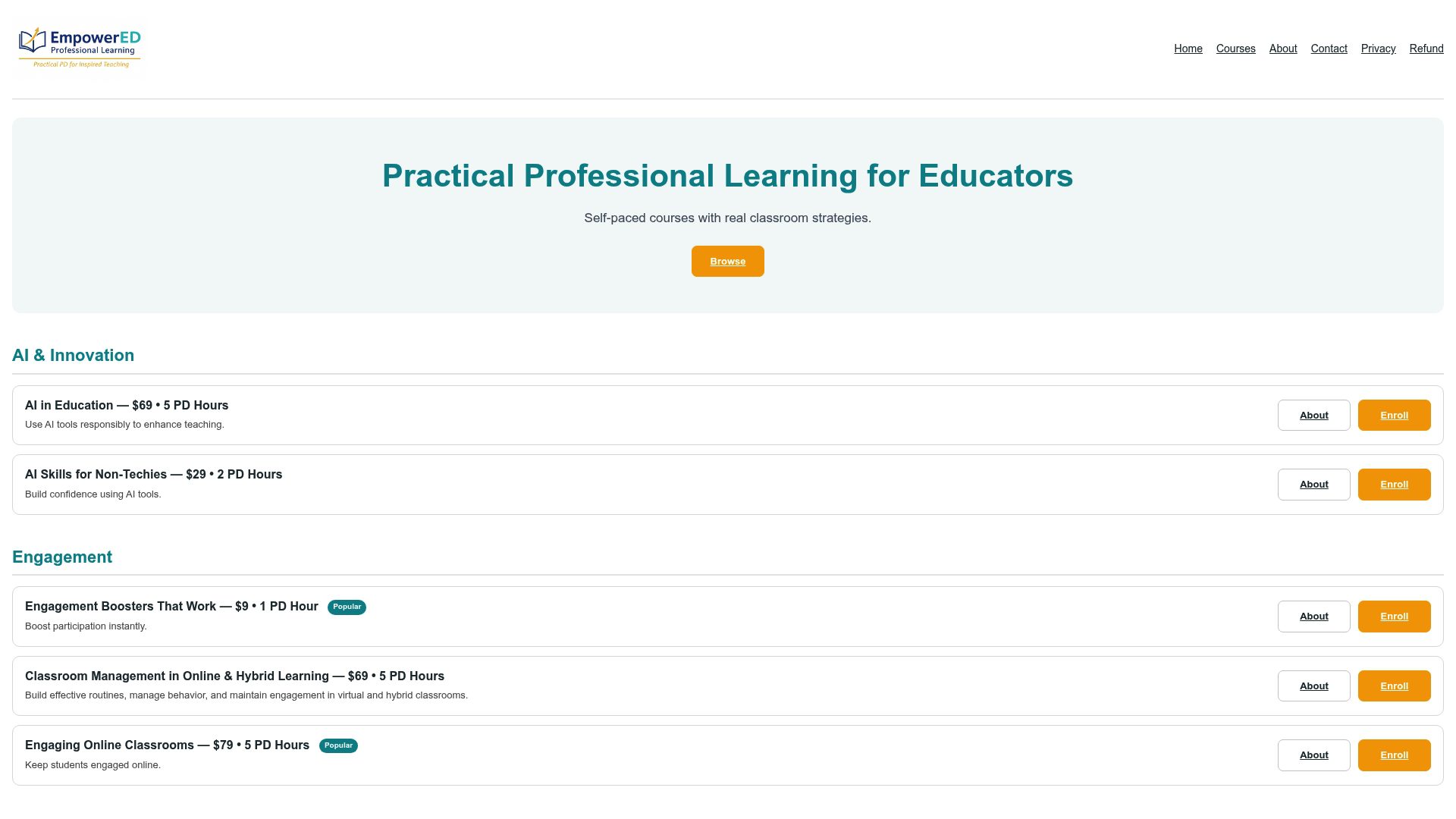
If the emotional and identity barriers covered above feel familiar in your classroom, Social-Emotional Learning & Teacher Wellness connects those dynamics to concrete routines that rebuild student trust in reading tasks. And if you’re weighing where AI tools genuinely help with differentiating text sets versus where they just add noise, AI in Education covers that ground directly, without the hype.
Every course is self-paced with instructor feedback and ends with a PD certificate, so individual teachers can enroll on their own timeline, and schools or districts can license across a team when a whole grade level needs the same toolkit. Start with the course that maps to your most urgent classroom gap and build from there.
Sources
For deeper reading beyond this guide:
- Effectiveness of Interventions That Foster Reading Motivation: a Meta-analysis
- Motivating Adolescents to Read
- Cultivating a love of reading in students (Edutopia)
Recommended
- Student Engagement Strategies for K-12 Educators: 2026 Guide
- Classroom Engagement Strategies for Educators: 2026 Guide – EmpowerED: Professional Development for Educators
- Active Learning Strategies for K–12 Teachers: Top 10 – EmpowerED: Professional Development for Educators
- Engagement Tools for Visual Learners: Top 10 for K-12 – EmpowerED: Professional Development for Educators