The fastest way to start a lesson that gets thinking and focus is a short, multimodal curiosity hook, whether that’s a video clip, a provocative question, or a quick hands-on task, paired with a 60 to 90 second processing routine like a turn-and-talk or quick write. Try one of these tomorrow:
- Short video + question: 2 minutes, any grade, works best when the clip stops right before the answer.
- Provocative fact: 60 seconds, ideal for science and social studies openers.
- Mystery object: 3 to 5 minutes, strong for elementary and middle school inquiry units.
- Quick problem: 3 minutes, best for math and STEM classes needing retrieval practice.
- Movement-based prompt: 2 minutes, great for younger students or post-lunch energy dips.
- Retrieval starter: 90 seconds, use daily to reinforce yesterday’s content.
Pick one, set a visible timer, and give students a 60 to 90 second processing window before you connect it to today’s objective.
Key Takeaways
Effective lesson hooks combine curiosity, brevity, and a clear link to the day’s objective, and the 4R framework makes them sustainable to run every day.
| Point | Details |
|---|---|
| Keep hooks short | Most effective hooks run 30 seconds to 5 minutes, depending on grade and complexity. |
| Use the 4R framework | Routine, Repeatable, Retrievable, and Reversible hooks lower prep time and cognitive load. |
| Target multiple engagement types | Emotional and cognitive engagement predict learning outcomes; agentic hooks boost teacher responsiveness. |
| Build in multimodal access | Pairing visual, auditory, and kinesthetic elements increases access for diverse learners. |
| Get structured support | Empowered Professional Learning’s Engagement Boosters That Work course offers templates, feedback, and a PD certificate for building hooks that stick. |
Table of Contents
- What Counts as a Lesson Hook (and How Long Should One Last)?
- Why Hooks Work: The Research Behind the First Five Minutes
- 25 Ready-to-Run Hook Activities Organized by Type
- How to Design a Hook That Actually Works: The 4R Framework
- Managing the Room: From Hook to Instruction Without Losing Momentum
- Five Minute-by-Minute Hook Scripts to Try Tomorrow
- What Changes When Teachers Commit to Better Hooks
- Get Step-by-Step Support Building Hooks That Stick
- Frequently Asked Questions
- Sources
What Counts as a Lesson Hook (and How Long Should One Last)?
A lesson hook is a short opening activity that captures attention and connects students emotionally or cognitively to what they’re about to learn, before you deliver any direct instruction. It’s not filler. It’s the on-ramp to your objective.
Most effective hooks run between 30 seconds and 5 minutes. Shorter works for retrieval starters and quick facts; longer fits mystery objects or short debates that need processing time. A good rule: the younger the students or the more complex the objective, the more you lean toward the shorter end so attention doesn’t drift.

A hook differs from a general warm-up or “do now” in one key way: a hook is designed to connect directly to today’s specific objective, not just to get students settled or reviewing. A warm-up can run on autopilot. A hook has to earn its place by setting up what comes next.
Why Hooks Work: The Research Behind the First Five Minutes
Students who start a lesson curious, rather than passively waiting for instruction, shift from listeners to thinkers before the teaching even begins. That shift matters because engagement isn’t one thing. Researchers break it into four types, and each one responds differently to how you open class:
- Emotional engagement (interest, curiosity, enjoyment): the strongest predictor of learning outcomes in a four-dimensional engagement study.
- Cognitive engagement (mental effort, strategy use): also tied directly to achievement in that same study.
- Behavioral engagement (participation, attention): the most visible, and the easiest to boost with a hook.
- Agentic engagement (students shaping the lesson): uniquely predicts increased teacher support, meaning hooks that invite student choice or input tend to pull more responsive teaching behind them.
A one to three minute clip paired with a purposeful question, followed by brief turn-and-talk time, activates prior knowledge and positions students as active thinkers rather than passive recipients. That’s the mechanism worth remembering: hooks don’t just entertain, they front-load the cognitive work your lesson needs later.
25 Ready-to-Run Hook Activities Organized by Type
Multimodal hooks, ones that blend visual, auditory, and kinesthetic elements, increase access for diverse learners by giving every student more than one way into the content. Here’s a working menu organized by modality, with adaptations built in.
Visual hooks
- Mystery image reveal. Show a zoomed-in photo and reveal it gradually. (2 minutes, no materials, works for any subject.) Script: “What do you think this is? You have 30 seconds to guess with a partner.”
- Before/after comparison. Display two contrasting images. (2 minutes, projector needed.) Adapt for history by comparing “then and now” photos of a location.
- Wordless picture prompt. Show an image with no caption and ask what story it tells. (3 minutes, strong ELL support tool.)
- Data snapshot. Project a striking chart or graph with no labels. (3 minutes, ideal for math and science.)
Auditory hooks
- Sound mystery. Play a short unlabeled sound clip and ask students to guess its source. (90 seconds, works well in elementary science.)
- Song lyric analysis. Play 30 seconds of a song tied to your theme. (2 minutes, strong for ELA and social studies.)
- Podcast snippet. Play a short excerpt, then pose a follow-up question. (3 minutes, good for middle and high school.)
Kinesthetic hooks
- Four corners. Post four opinions around the room and have students physically move to the one they agree with. (3 minutes, great for debate-style objectives.)
- Human graph. Students line up based on their answer to a quick poll question. (3 minutes, effective for data units.)
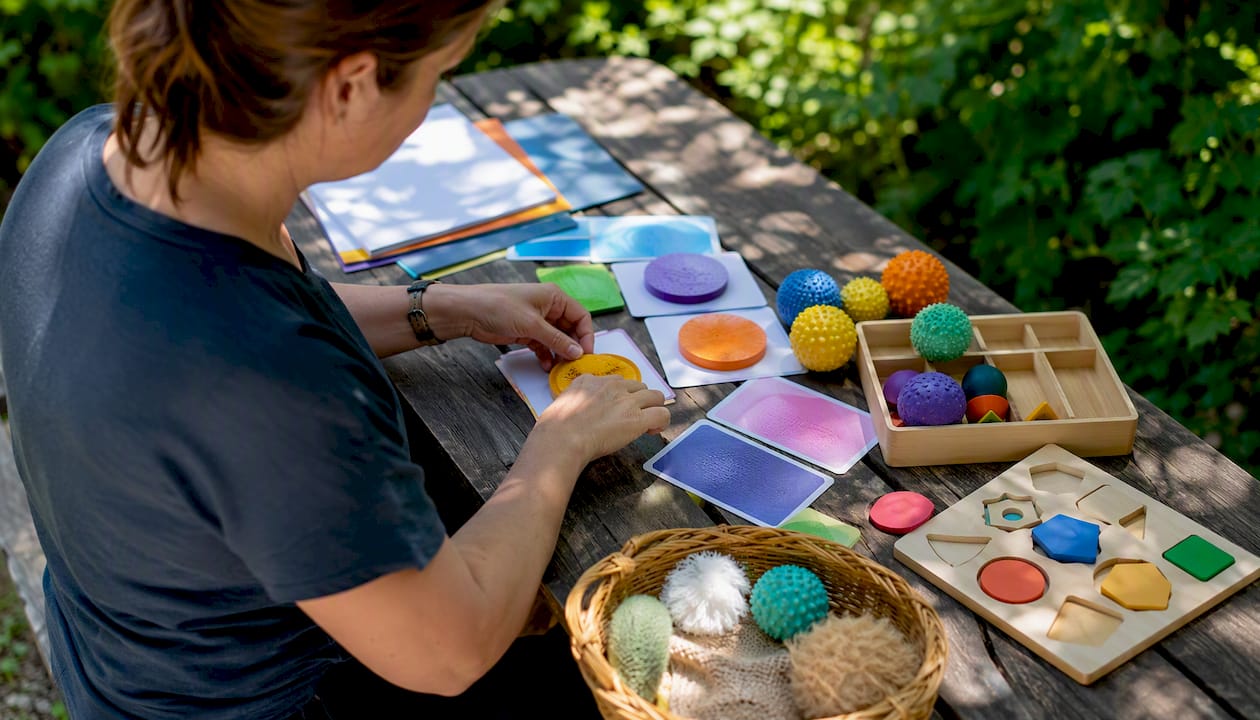
- Quick hands-on task. Give a small manipulative or object to sort or build. (4 minutes, strong for early primary math.)
Text and story hooks
- One-sentence cliffhanger. Read a single dramatic sentence from today’s text with no context. (60 seconds, works for any ELA lesson.)
- Anonymous quote guess. Post a quote and ask students to guess who said it. (2 minutes, good for history and literature.)
Problem-based hooks
- Real-world problem. Pose a scenario students must solve with content they don’t yet have. (4 minutes, ideal math and science opener.)
- Would-you-rather dilemma. Present two tough choices tied to your topic. (2 minutes, sparks quick debate.)
- Broken example. Show an incorrect solution and ask students to find the error. (3 minutes, strong retrieval builder.)
Tech-enhanced hooks
- Short video + question. Stop a 1 to 3 minute clip right before the resolution. Pairing media with a purposeful question works across nearly every subject.
- AI-generated prompt. Use an AI in Education tool to generate a quick discussion question or scenario tailored to your topic, cutting prep time significantly.
- Interactive poll. Run a one-question live poll and discuss results. (2 minutes, works well in hybrid classrooms.)
- Digital mystery object. Share a cropped or filtered image via slides. (2 minutes, low-prep tech option.)
Retrieval starters
- Yesterday’s exit ticket, revisited. Display one question from yesterday’s check for understanding. (90 seconds, builds long-term retention.)
- Two-minute quiz. Three quick recall questions, no stakes attached. (2 minutes, daily habit builder.)
- Vocabulary flash. Show a term from a prior unit and ask for a quick definition or example. (90 seconds, strong for spiral review.)
- Concept map starter. Students add one new connection to a running class concept map. (3 minutes, good for units with heavy vocabulary.)
- Agentic choice hook. Let students vote on which of two problems to tackle first. (2 minutes, builds ownership and predicts more responsive follow-up teaching.)
- SEL check-in hook. A one-word mood share tied loosely to today’s theme. (90 seconds, builds emotional safety before harder content.)
Pro Tip: Keep three or four of these on rotating index cards taped inside your lesson planner. When you’re short on prep time, pull a card instead of designing a new hook from scratch.
For more low-prep options ready to run tomorrow, browse 50 teaching ideas for K to 12 teachers.
How to Design a Hook That Actually Works: The 4R Framework
Sustainable hooks follow a 4R framework: Routine, Repeatable, Retrievable, Reversible. Keeping the structure consistent while swapping content lowers cognitive load at the start of class, so students focus on the task instead of figuring out new expectations each day.
- Routine: Use the same opening signal every day (a slide format, a timer sound) so students know what’s coming.
- Repeatable: Design a template you can refill with new content in under five minutes.
- Retrievable: Build in a moment that pulls prior knowledge forward, not just novelty.
- Reversible: Choose hooks you can shorten or extend on the fly if timing runs tight.
Pair the 4R framework with a simple 3-hook strategy: one element that captures attention, one that activates prior knowledge, and one that connects explicitly to today’s objective. Not every hook needs all three, but the strongest ones hit at least two.
Pro Tip: Start with one template your first week, then add variety once students are fluent in the routine. Building routines gradually beats overhauling your opener every day.
Managing the Room: From Hook to Instruction Without Losing Momentum
A hook only works if the transition out of it is just as tight as the hook itself.
- Use a visible timer so students self-monitor without you announcing time checks.
- Post success criteria before the hook starts (“Be ready to share one idea with your partner”).
- Give a consistent verbal or visual signal to end the hook (“Pencils down, eyes up” or a chime).
- Offer a UDL-friendly exit option, like writing, drawing, or verbal sharing, so all students can participate.
- If a hook stalls or goes off-topic, cut it short with a direct bridge: “Great thinking, let’s take that idea into today’s lesson.”
For scripted routines you can adapt directly, see classroom routine types explained.
Five Minute-by-Minute Hook Scripts to Try Tomorrow
- Elementary song + movement (K to 2, any subject). Minute 1: play a 30-second theme song with a matching motion. Minute 2: ask “What do you think we’re learning about today?” Materials: speaker. Product: a one-word guess. Extension: repeat the motion during transitions all day.
- Middle school controversial claim (ELA or social studies). Minute 1: post a debatable statement. Minute 2 to 3: four corners response. Minute 4: quick poll of shifted opinions. Extension: connect directly to today’s text.
- High school data prompt (math or science). Minute 1: project an unlabeled graph. Minutes 2 to 3: pairs guess the variables. Minute 4: reveal and connect to the day’s concept. Extension: ask what data would change their guess.
- Retrieval starter (any grade, daily use). Minute 1: display two quick-recall questions from yesterday. Minute 2: students answer on whiteboards and hold up. Product: instant formative check.
- Mystery object (elementary or middle school science). Minutes 1 to 2: pass around a covered object for touch-only guessing. Minute 3: reveal and connect to the lesson’s core vocabulary.
Measure effectiveness fast: a 30-second thumbs-up/thumbs-down signal or a one-question exit ticket tells you whether the hook actually built the engagement you wanted.
What Changes When Teachers Commit to Better Hooks
The biggest shift I’ve seen in classrooms that adopt multimodal hooks and the 4R framework isn’t excitement, it’s stamina. Students settle into the routine faster, which means less time spent managing transitions and more time spent on the actual objective.
My honest recommendation: don’t overhaul your openers overnight. Pick one hook type, run it consistently for two weeks, and track a single engagement signal, like how quickly students quiet down or how many contribute to the first discussion. Small, trackable changes beat sweeping ones every time.
Get Step-by-Step Support Building Hooks That Stick
Empowered Professional Learning gives you the templates and feedback that turn a good hook idea into a repeatable classroom habit, without spending your weekend redesigning lesson openers from scratch.
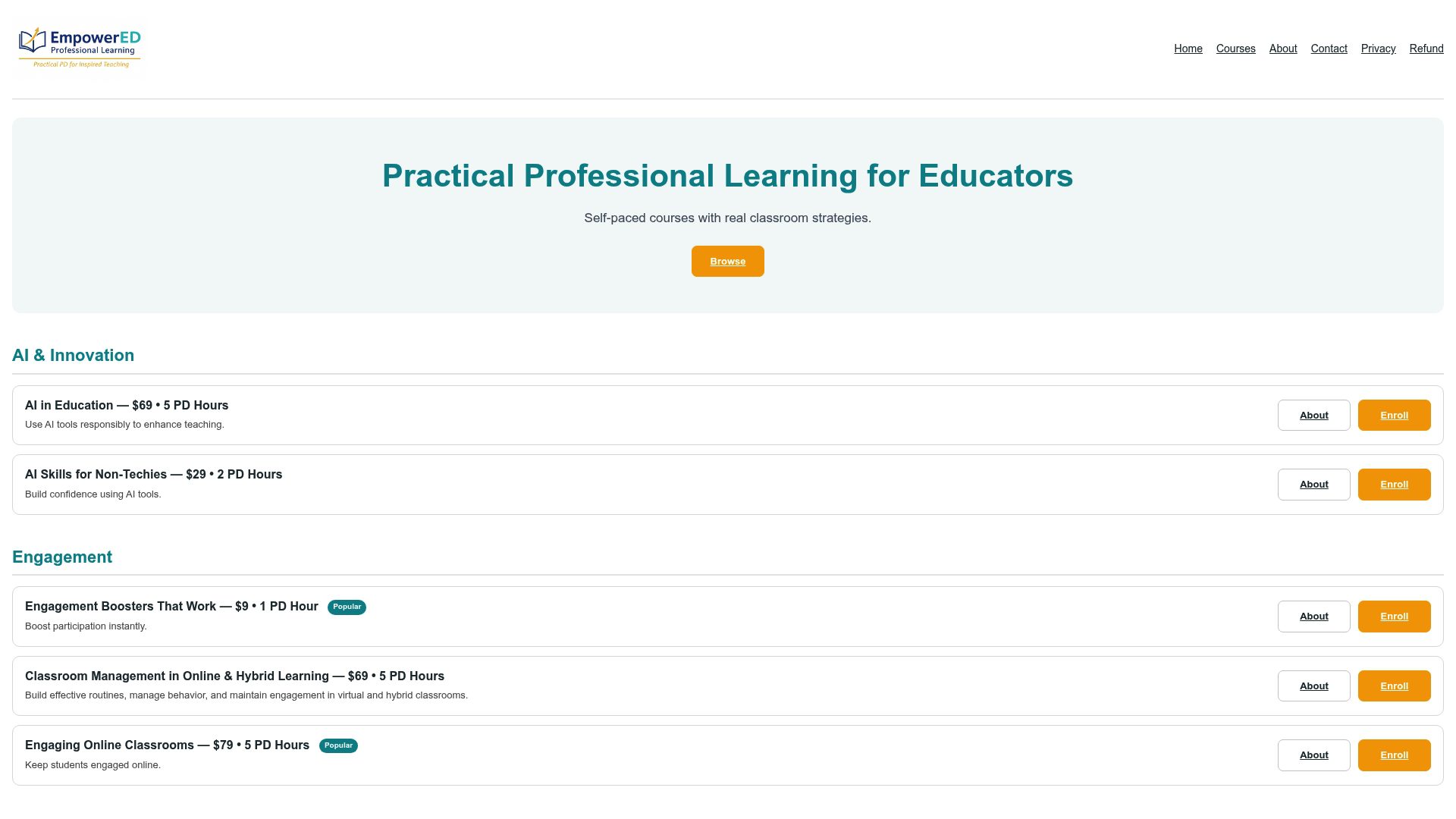
The Engagement Boosters That Work course walks through classroom-ready hook design, the 4R framework in depth, and low-prep templates you can adapt within a week of enrolling. If your students need more built-in access points, the Universal Design for Learning (UDL) & Accessibility course covers how to adapt any hook for diverse learners. And if you want to cut hook prep time using smart tools, AI in Education shows you exactly how. Every course includes personalized feedback and a professional development certificate. Enroll in one module this week and walk into Monday’s class with a new hook ready to run.
Frequently Asked Questions
What is a good hook activity to start a lesson?
A short, curiosity-driven activity like a stopped video clip, a provocative question, or a quick hands-on task works well because it activates prior knowledge before instruction begins.
How long should a lesson hook last?
Most hooks run between 30 seconds and 5 minutes, with shorter ones fitting retrieval practice and longer ones fitting mystery objects or debate-style prompts.
What’s the difference between a hook and a warm-up?
A warm-up gets students settled or reviewing generally, while a hook connects directly to today’s specific lesson objective.
How do I keep hook activities from taking too much class time?
Use a visible timer, a consistent ending signal, and a 4R template you can shorten or extend depending on how the day is going.
Can AI tools help generate hook activities?
Yes. Tools designed for classroom use can quickly generate discussion questions, scenarios, or prompts tied to your topic, cutting prep time without sacrificing quality.
Sources
- Dont Start With InstructionStart With Curiosity | Georgia Public Broadcasting
- Creating effective lesson starters | Edutopia
- Student engagement and learning outcomes: an empirical study applying a four-dimensional framework
- Springer article on engagement (agentic engagement and specialized purpose hypothesis)
- How to Create Effective Lesson Hooks: Tips and Examples for Teachers – Khan Academy Blog
Recommended
- 50 Teaching Ideas for K–12 Teachers: Ready to Run – EmpowerED: Professional Development for Educators
- Active Learning Strategies for K–12 Teachers: Top 10 – EmpowerED: Professional Development for Educators
- 15 Classroom Management Techniques for K–12 Teachers – EmpowerED: Professional Development for Educators
- Learning Styles Examples Every Educator Should Know – EmpowerED: Professional Development for Educators