Online instructional coaching pairs a teacher with a trained coach who uses video, observation, and targeted feedback to strengthen classroom practice. When the coaching is sustained over months rather than a single session, it produces measurable gains in instruction and smaller, but real, improvements in student outcomes. The rest of this guide explains the evidence behind that claim, how virtual delivery actually works, and how to choose a program worth your school’s budget.
TL;DR:
- Virtual coaching can produce significant improvements in teaching practices when core practices like observation, modeling, and specific feedback are maintained.
- Effective programs ensure recordings are of good quality, secure, and include accessible options for teachers with unreliable internet connections.
- Regular, sustained coaching cycles using the Impact Cycle—Identify, Learn, Improve—are more effective than one-time sessions or infrequent check-ins.
- Careful coach caseload management, proper training, and alignment with instructional priorities are crucial for coaching success.
- Online coaching has been shown to be as impactful as in-person coaching when based on evidence-based practices and structured feedback mechanisms.
Table of Contents
- Does Online Coaching for Teachers Actually Improve Instruction?
- How Does Virtual Instructional Coaching Actually Get Delivered?
- What Does a Coaching Cycle and Feedback Session Look Like?
- How Do You Choose a Quality Online Coaching Program?
- How EmpowerED’s Courses Map to Evidence-Based Coaching
- What Teachers Get Wrong About Coaching Relationships
- Ready to Try Classroom-Ready Coaching Support?
- Sources
- FAQ
Does Online Coaching for Teachers Actually Improve Instruction?
Yes, and the research base is larger than most educators realize. A meta-analysis of teacher coaching by Kraft, Blazar, and Hogan found that instructional coaching produces moderate improvements in teaching practice, along with smaller but positive effects on student achievement. That pattern holds whether the coach walks into the room or joins by video.
What separates coaching that works from coaching that wastes everyone’s time comes down to four practices identified by the National Center for Systemic Improvement:
- Alliance-building. The coach and teacher establish trust before any feedback happens, often through an initial conversation about goals rather than problems.
- Observation. The coach watches real instruction, whether live or recorded, instead of relying on lesson plans or secondhand reports.
- Modeling. The coach demonstrates a strategy, either in a co-taught segment or a short video clip, so the teacher sees the technique in action.
- Specific, timely feedback. Feedback arrives within days, not weeks, and names an exact moment in the lesson rather than a general impression.
Virtual delivery doesn’t weaken these practices when it’s done right. An ERIC-published study on technology-mediated coaching found that a summer institute paired with six to eight weeks of web-based coaching produced significant gains in teacher practice, using the same four ingredients through a screen instead of in person.
How Does Virtual Instructional Coaching Actually Get Delivered?
Most programs run on three delivery modes, often blended within a single coaching relationship.
Video recording and review sits at the center of almost every credible model. Teachers record a lesson segment, and the coach reviews it before a feedback conversation. Self-observation matters here too: watching your own recorded lesson tends to surface blind spots that no one else’s description could capture, according to the ERIC coaching study.
Synchronous sessions happen over video conference, usually 20 to 30 minutes, with an agenda the coach shares in advance. Asynchronous workflows let coaches leave time-stamped comments directly on a video clip, which fits teachers who can’t find a matching free period.
Before enrolling in or building a program, confirm the basics:
- Recording quality that captures both the teacher and student responses, not just a wide classroom shot.
- A file-sharing platform with clear privacy permissions for student images and voices.
- Captioning or transcript options for accessibility.
- A low-bandwidth fallback, since rural and under-resourced schools often can’t stream reliably.
Pro Tip: If your school’s internet connection is unreliable, ask your coaching provider whether clips can be uploaded overnight and reviewed asynchronously. You lose the live conversation but keep the coaching cycle moving.
What Does a Coaching Cycle and Feedback Session Look Like?
A well-run cycle follows a structure known as the Impact Cycle, described in REL/IES coaching research: Identify, Learn, and Improve.
- Identify. The teacher and coach set one specific, evidence-based goal, often tied to a single visible student behavior, like hands raised or wait time after a question.
- Learn. The coach models the target strategy through a short video or live demonstration, and the teacher practices it before recording their own attempt.
- Improve. The teacher implements the strategy, records a lesson, and the pair reviews data together to refine the approach.
A typical 30 to 45 minute review meeting opens with the teacher’s self-reflection on the recorded clip, moves into the coach’s specific feedback tied to timestamped moments, and closes with a written action plan for the next lesson.
Cadence varies by program, but weekly or biweekly sessions are common, and quality programs generally build toward sustained contact across the school year rather than a handful of one-off check-ins.
How Do You Choose a Quality Online Coaching Program?
Not every program labeled “coaching” delivers the four practices above. Before signing a contract or recommending a vendor to your district, dig into these criteria.
- Coach caseload. A coach juggling 40 teachers can’t give anyone specific, timely feedback; ask what the ratio actually is.
- Coach training and background. Ask how coaches are trained and whether they’ve coached virtually before, not just taught in a classroom.
- Curriculum alignment. The coaching goals should connect to your school’s actual instructional priorities, not a generic checklist.
- Outcome measurement. A credible program tracks teacher practice change and, ideally, student-level indicators over time.
- Privacy safeguards. Confirm how video of students is stored, shared, and eventually deleted.
Watch for red flags: coaching data shared with evaluators, goals that stay vague session after session, or contact so infrequent it can’t build momentum. Design principles research on instructional coaching points to sustained contact and manageable caseloads as the factors that separate programs that move practice from ones that just look good on paper. Pilot a program with a small group first, and measure early success through teacher self-reports and one or two observable classroom changes before scaling district-wide.
How EmpowerED’s Courses Map to Evidence-Based Coaching
Empowered Professional Learning built its catalog around the same active ingredients the research points to, not a generic slate of webinars.
- Social-Emotional Learning & Teacher Wellness supports the sustained, trust-based relationship that alliance-building depends on.
- AI in Education gives teachers practical tools for analyzing their own video and planning targeted feedback, echoing the video-review model behind the Impact Cycle.
Virtual coaching studies show no consistent gap in impact compared to in-person coaching when these practices are implemented well, which is the whole premise behind building a course catalog that works online first. Courses are authored with input from Brian Koster, Ed.D. Sample a course individually, or reach out about district licensing through EmpowerED’s professional learning catalog to pilot with a full team.
What Teachers Get Wrong About Coaching Relationships

The biggest mistake I see schools make is blending coaching with evaluation. The moment a coach’s notes can affect a teacher’s rating, honest reflection disappears, and so does the alliance the whole model depends on. Coaching needs a firewall from formal evaluation, in writing if necessary.
The second mistake is spreading coaches too thin. A manageable caseload with focused, biweekly sessions beats a long list of shallow monthly check-ins every time. Over a school year, realistic wins look like a teacher increasing student talk time, tightening transitions, or using wait time consistently, not a total classroom overhaul.
— Brian Koster, Ed.D.
Ready to Try Classroom-Ready Coaching Support?
Traditional in-person coaching often means waiting for a district-assigned coach with a packed caseload and limited flexibility. Some providers offer self-paced, instructor-guided courses built around the exact practices research links to real classroom change, providing personalized feedback without waiting on a district calendar.
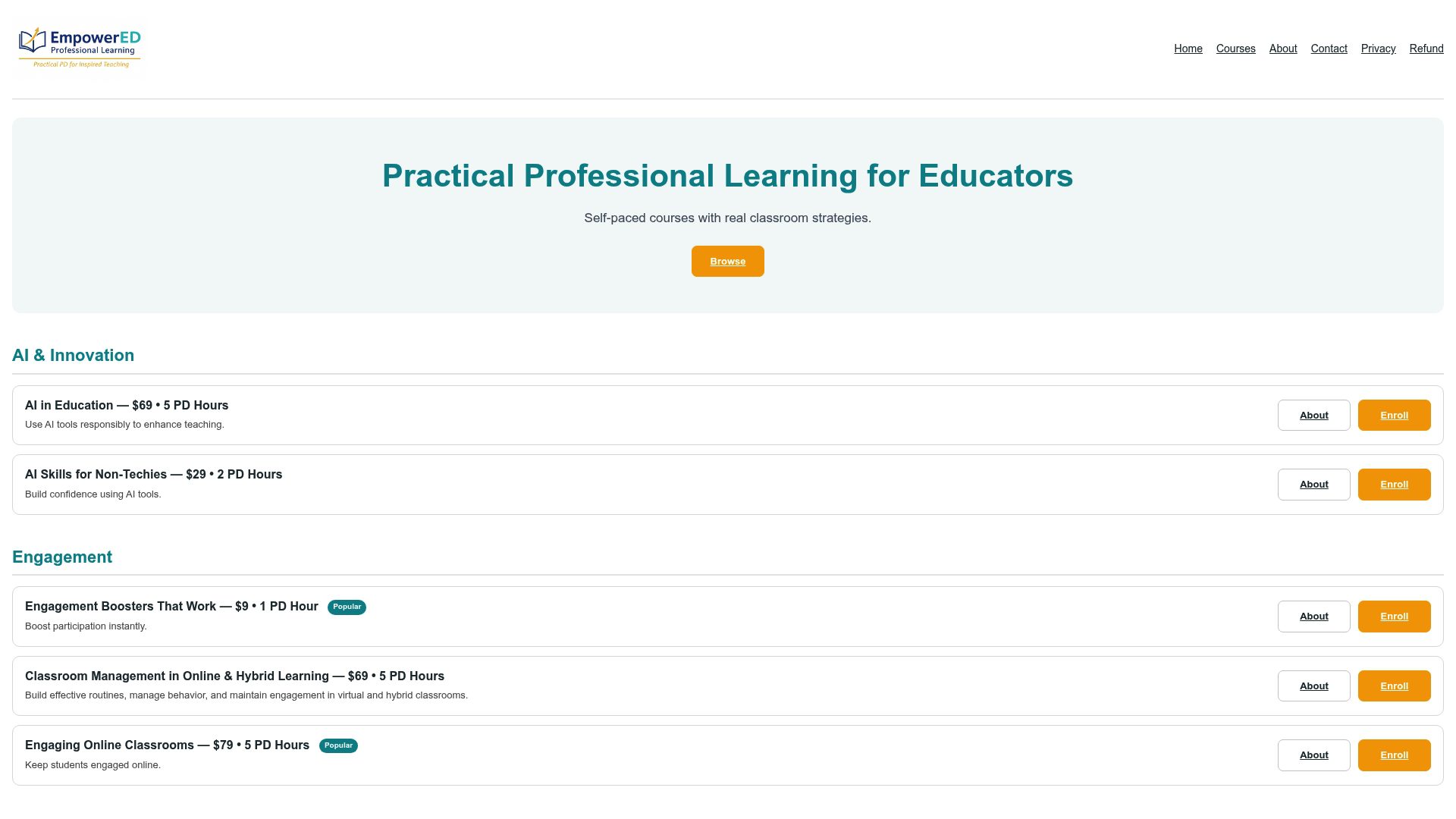
If engagement is your current goal, start with Engagement Boosters That Work for strategies you can use this week. Teachers looking to build the sustained support that makes coaching stick can start with Social-Emotional Learning & Teacher Wellness. For a look at how EmpowerED weaves video analysis and AI tools into coaching-style feedback, visit the AI in Education course page. Schools and districts can also explore the full professional learning catalog to request a team pilot.
Sources
- Meta-analysis of teacher coaching (Kraft, Blazar, Hogan)
- Effective coaching practices — AIR/NCSI infographic
- Improving Teacher Performance Through Instructional Coaching — REL/IES
- Active ingredients of instructional coaching (ERIC study)
FAQ
How Can a Teacher Make an Extra $1,000 a Month?
Many teachers earn extra income by tutoring online, grading standardized assessments remotely, or becoming a certified instructional coach themselves. Building expertise through professional development, such as courses in engagement strategies, can open paid coaching or consulting opportunities within a district.
What Is the 70/30 Rule in Teaching?
It’s a rough guideline for gauging active engagement, not a strict formula that every lesson must follow.
What Should Teachers Look for in an Online Tutoring or Coaching Platform?
Look for a platform that offers real observation of your teaching, whether live or via video, along with specific and timely feedback rather than generic tips. Programs built around the four core coaching practices, alliance-building, observation, modeling, and feedback, tend to produce better results than one-off webinars.
What Are the Core Elements of Effective Coaching?
Research points to four consistent elements: building a trusting alliance, observing real classroom practice, modeling strategies directly, and delivering specific, timely feedback. Programs like Empowered Professional Learning’s course catalog build instruction around these same elements rather than generic advice.
Can Online Coaching Really Match In-Person Coaching?
Yes, studies on virtual and technology-mediated coaching show no consistent gap in impact compared to in-person coaching when the same core practices are used. Video review and structured feedback sessions can carry as much weight online as they do in a shared classroom.